Buying a home is the largest financial transaction most people ever make.
In Washington State, where median home prices in many western counties have exceeded $500,000, the stakes are about as high as they get. Which makes it all the more surprising how much buyers rely on a single standard home inspection to tell them whether the plumbing system — one of the most expensive components in any home — is sound.
It isn’t that home inspectors do a poor job. It’s that their job, by definition, is limited to what’s visible. A hidden water leak — inside a wall, under a slab, in a crawl space, or along an underground supply line — is specifically the kind of problem that a visual inspection is not designed to find.
By the time you’ve signed the papers, those leaks belong to you.
What a Standard Home Inspection Does — and Doesn’t — Cover
Washington State requires sellers to disclose known defects, but the legal obligation is limited to what they actually know. Under RCW 64.06, the seller disclosure requirements cover systems and conditions the seller is aware of — not hidden problems that haven’t yet surfaced or that a previous owner never discovered.
A general home inspection adds another layer of due diligence, but it comes with a significant structural limitation: the Standards of Practice for home inspectors define their scope as a visual examination of accessible systems and components. Inspectors are not required — and typically are not equipped — to test plumbing systems under pressure, use acoustic detection equipment, or investigate conditions behind finished walls, under slabs, or in inaccessible crawl space sections.
What a general home inspector will typically catch: a visibly dripping faucet, a corroded shutoff valve, a water stain on a ceiling that’s already dried and discolored. What they will typically miss: a slow weeping joint inside a wall cavity that has been saturating insulation for two years, a pinhole leak in a copper line running under the slab that has been quietly feeding a moisture problem into the subfloor framing, or an underground supply line with a compromised section between the meter and the house.
These aren’t exotic failure modes. They’re common ones — especially in western Washington’s older housing stock.
Why Western Washington Homes Carry Elevated Plumbing Risk
Not all homes present the same level of hidden leak risk. But the Pacific Northwest has a particular combination of factors that makes pre-purchase plumbing scrutiny more important here than in many other parts of the country.
Aging galvanized supply lines. A significant portion of homes built before 1980 in King, Snohomish, Whatcom, and Skagit counties are still running on original galvanized steel supply lines. Galvanized pipe has a typical lifespan of 40 to 70 years — which means a 1965 home with original plumbing is operating on infrastructure that is well past its design life. Galvanized pipe corrodes from the inside, so the exterior may look intact while the interior walls have thinned to near-failure.
Polybutylene pipe in 1980s and 1990s homes. Tens of thousands of homes built during the suburban expansion of the 1980s and early 1990s were plumbed with polybutylene pipe — a gray plastic material that was eventually withdrawn from the market after widespread failure. Polybutylene degrades from the inside when exposed to chlorine in municipal water supplies and fails without visible warning. Many Snohomish and King County homes from this era still have it, and many sellers are unaware.
Copper pitting and slab-embedded lines. Copper supply lines in slab-on-grade homes — common along the I-5 corridor in Lynnwood, Marysville, and south King County — are embedded in concrete and have spent decades exposed to soil chemistry and seasonal moisture movement. Pinhole leaks in embedded copper are among the most expensive post-purchase discoveries a Washington homeowner can make, because finding them requires non-invasive detection equipment, and repairing them often involves concrete work.
Crawl space systems in older homes. A home with a crawl space that hasn’t been thoroughly inspected may have years of moisture accumulation, deteriorating pipe insulation, failing joints on aging drain lines, and subfloor framing in early stages of decay — none of which will be visible to a standard home inspector walking through the house above.
The Real Cost of Discovering a Leak After Closing
The financial math on pre-purchase leak detection is straightforward.
A professional non-invasive leak inspection — acoustic testing, pressure decay testing, thermal imaging — is a modest cost relative to the transaction it’s protecting. The cost of discovering a significant hidden leak after closing is a different number entirely.
Consider what post-closing leak discovery actually involves:
- Underground supply line leak: excavation, pipe repair or replacement, landscape restoration. In western Washington, where clay soils and established landscaping complicate any digging, these repairs routinely run into five figures.
- Slab leak on embedded copper: non-invasive detection (which you’ll need anyway), concrete cutting or trenchless epoxy lining, subfloor assessment. Depending on location and severity, this can range from several thousand dollars to well over $20,000.
- Crawl space moisture damage from a slow plumbing leak: the plumbing repair itself may be modest, but if the leak has been running long enough to cause wood moisture content to exceed the 19–28% threshold where decay fungi establish, subfloor and joist replacement enters the equation — along with mold remediation if the conditions have been sustained.
- Mold remediation in a wall cavity or crawl space that has been supporting active mold growth can run $3,000 to $30,000 or more depending on the extent and materials affected.
None of these costs are covered by a standard homeowner’s insurance policy when the damage is the result of a gradual leak — insurance companies routinely deny gradual leak claims on the grounds that the homeowner should have detected and repaired the problem before it caused damage. Buying a home with an existing hidden leak means inheriting both the repair and the insurance gap.
What a Pre-Purchase Leak Inspection Actually Involves
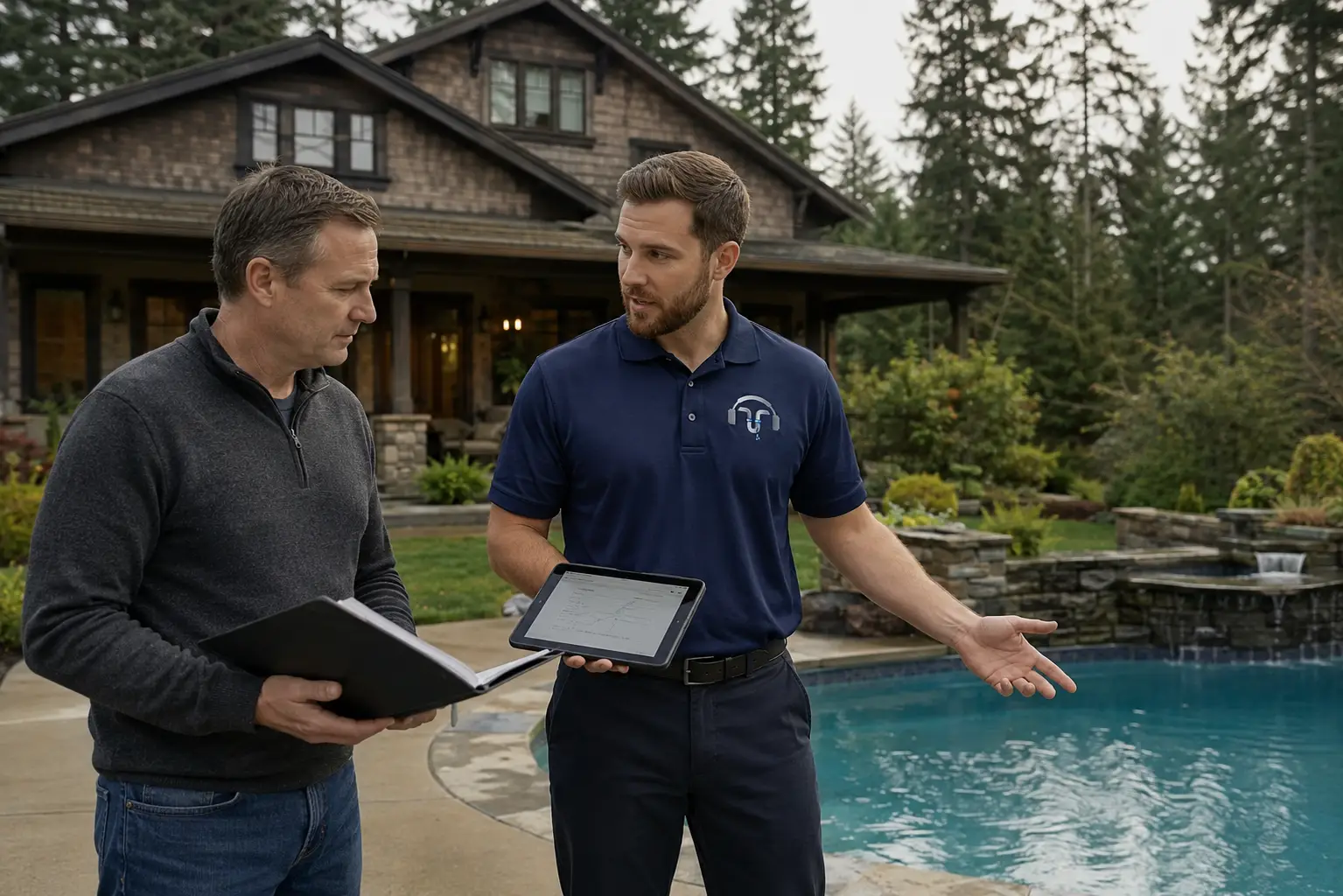
A professional pre-purchase leak inspection is distinct from a general home inspection in both method and scope.
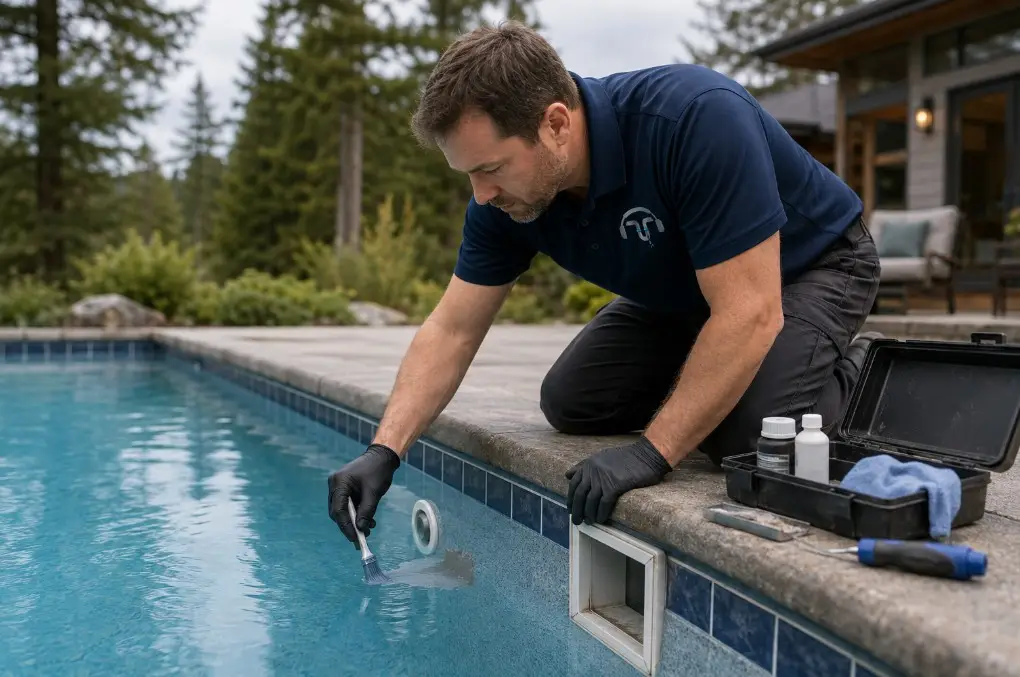
Rather than a visual walkthrough, it uses detection equipment specifically designed to find leaks that aren’t visible:
- Pressure decay testing isolates individual plumbing systems — supply lines, irrigation, pool plumbing — and tests whether they hold pressure over time. A system that loses pressure has a leak somewhere. The question is where.
- Acoustic detection equipment listens through walls, slabs, and soil for the specific sound signature of water escaping under pressure. Trained technicians can narrow a leak to a specific section of pipe before any surface is opened.
- Thermal imaging identifies temperature anomalies in walls, floors, and ceilings caused by moisture presence — wet areas conduct heat differently than dry ones, and a thermal camera makes those differences visible.
The result isn’t a general assessment. It’s a specific answer: either the plumbing system holds pressure and shows no acoustic or thermal anomalies, or it doesn’t — and if it doesn’t, you know where the problem is before you commit.
How Buyers Use Detection Results at the Negotiating Table
A pre-purchase leak inspection isn’t just about knowing what you’re buying. It’s a negotiating instrument.
In a competitive Washington real estate market, buyers are often reluctant to make requests that might cost them the deal. But a documented leak finding — from professional detection equipment, with a specific location and a repair estimate — is materially different from a subjective concern about the plumbing. It’s an objective finding that any reasonable seller, seller’s agent, or transaction attorney recognizes as a legitimate basis for a price adjustment, a repair credit, or a seller-funded repair prior to closing.
Buyers who discover a leak during inspection have options. Buyers who discover a leak six months after closing have a repair bill.
The inspection contingency window — typically five to ten business days in a Washington purchase and sale agreement — is the right time to do this. A professional leak detection can typically be scheduled and completed within that window, and the results are available immediately.
Who Should Order a Pre-Purchase Leak Inspection
Not every home purchase carries the same plumbing risk. But a pre-purchase leak inspection is especially worth prioritizing when:
- The home was built before 1985, when galvanized steel and early copper systems were standard
- The home was built between 1978 and 1995, when polybutylene pipe was in widespread use
- The home is slab-on-grade construction, particularly in the I-5 corridor communities
- The home has a crawl space that the general inspector noted as “limited access” or “partially inspected”
- The listing disclosure reveals any prior water damage, plumbing repairs, or moisture remediation
- The home has been vacant, tenant-occupied, or a rental property — where deferred maintenance and unreported leaks are more common
- The home has a swimming pool, irrigation system, or any underground plumbing that the general inspection didn’t specifically pressure-test
If any of the above apply, the inspection window is the right time to act — not after closing, when the leverage is gone and the cost is yours alone.
Protect the Investment Before It Becomes Yours
A home purchase in Washington represents years of savings, a long-term financial commitment, and in many cases, the foundation of a family’s financial future. The plumbing system running through that home is invisible, aging, and in many cases has never been professionally tested.
A pre-purchase leak inspection doesn’t replace a general home inspection. It fills the gap that a general inspection, by design, leaves open.
If you’re under contract on a home in King, Snohomish, Skagit, Whatcom, Island, or San Juan County and want to know what’s actually inside those walls and under that slab before you close — call Action Leak Detection at (360) 922-8829.
We work within inspection contingency windows, we provide written findings, and we use non-invasive equipment that answers the question without damaging the property. We’ll tell you what’s there before it becomes your problem to fix.
Know before you close.
Action Leak Detection serves Whatcom, Skagit, Snohomish, King, Island, and San Juan counties. We answer 24/7 — including weekends and holidays.