Most pool owners think of a leak as a water problem. You lose water, you add water, you keep an eye on the bill. Annoying, but contained.
The trouble is that a pool leak doesn’t stay in the pool. Every gallon that escapes a cracked shell, a failing fitting, or a buried plumbing line has to go somewhere, and where it goes is into the ground directly beneath your deck, your patio, and your landscaping. Out of sight, that water is quietly doing the one thing concrete and soil can’t tolerate: it’s washing away the support that holds everything level.
By the time the damage shows up on the surface as a cracked deck, a sinking paver, or a soft patch of lawn, the leak has usually been running for months. And at that point you’re no longer looking at a plumbing repair. You’re looking at concrete work, regrading, and sometimes foundation-adjacent repairs that cost many times what the original leak would have. Here’s what a hidden pool leak actually does to your property, and why it matters more in western Washington than almost anywhere else.
Where the Water Goes When It Leaves Your Pool
A pool is a large body of water held in place by a shell and a network of pipes. When any part of that system fails, the water doesn’t pool up politely where you can see it. It follows gravity and the path of least resistance down into the surrounding soil.
Leaks in the underground return and supply lines, the pipes running between your pool and the equipment pad, are the worst offenders here, because they release water several feet down, directly into the soil that supports your deck and surrounding structures. Leaks in the shell or fittings do the same thing more slowly, seeping out below the waterline into the ground around the pool walls. In both cases, the destination is the same: the compacted soil that everything around your pool is built on top of.
That soil is the entire foundation of your pool deck, your coping, and any patio or walkway nearby. It only does its job as long as it stays firm, evenly packed, and properly drained. A leak attacks all three of those conditions at once.
How a Leak Quietly Destroys a Concrete Deck
Your pool deck looks solid, but it’s really just a slab resting on dirt. When a leak saturates and erodes the soil underneath, the ground compacts, shifts, and washes away, leaving empty voids beneath the concrete. The slab is now spanning a gap with nothing holding it up.
Concrete is strong when it’s evenly supported and surprisingly fragile when it isn’t. Once a void opens up beneath it, the deck starts to do predictable things:
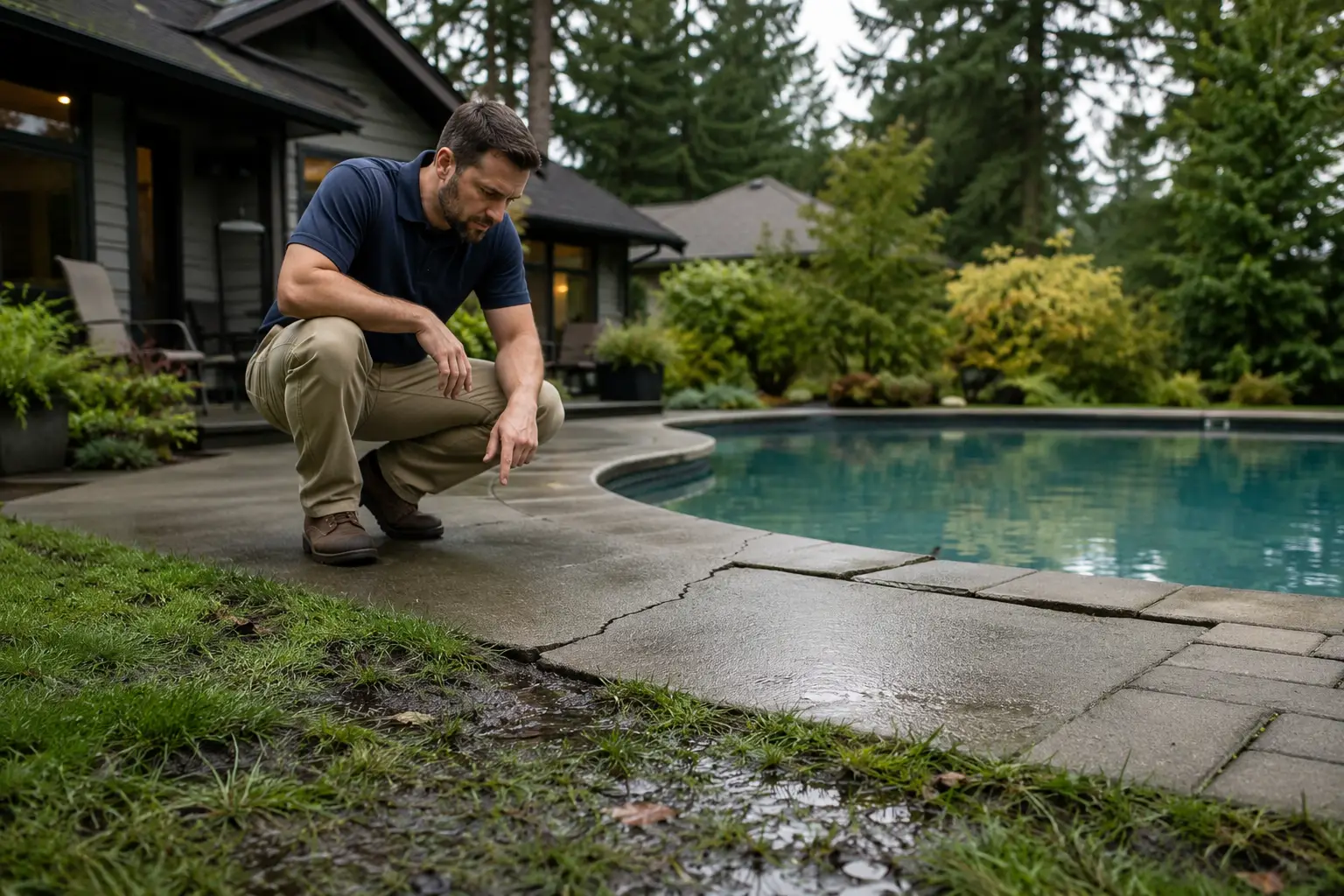
- Cracks appear that weren’t there before, often running in lines that point back toward the leak source
- Sections sink or tilt, creating uneven joints, lips you can trip on, and pavers that no longer sit flush
- Coping pulls away from the pool edge as the ground beneath it settles
- Soft or hollow-sounding spots develop, where the slab flexes slightly underfoot because the soil beneath is gone
Cracking and sinking around a pool deck is a classic signal of ground settling underneath the slab, and a slow leak is one of the most common hidden causes. The frustrating part is that fixing the cracked concrete without finding the leak first solves nothing. The water keeps washing out the soil, and the new concrete settles and cracks right alongside the old.
What It Does to Your Yard and Landscaping
The damage isn’t limited to hardscape. A leak feeding water into your yard creates its own set of tells, and they’re often the first thing an attentive owner notices:
- Soggy, spongy ground near the equipment pad or along the deck edge that stays wet even during a dry stretch
- A strip of unusually lush, fast-growing grass or plants tracing the path of a leaking buried line, getting a private water supply the rest of the yard isn’t
- Erosion, ruts, or low spots where moving water has carried soil away beneath the surface
- Settling or sinking in garden beds, walkways, or the lawn itself as voids form and the ground gives way
In the most serious cases, a leak close to the house can route water toward your home’s foundation, turning a pool problem into a structural one for the building itself. That’s the scenario worth heading off early, because foundation repairs are in a different cost category entirely.
Why Western Washington Makes This Worse
This is where our region changes the math. Pool decks and foundations everywhere are vulnerable to leaks, but western Washington’s ground conditions tilt the odds against you.
Much of the area sits on clay-heavy soils with naturally high seasonal water tables. Clay holds water rather than letting it drain away, so leak water doesn’t disperse and disappear the way it might in sandy desert soil, it lingers, saturates, and migrates. The ground stays wet, the soil stays soft, and the erosion and settling continue for as long as the leak runs.
That same wet ground also swells and shrinks with the seasons. Soil that’s already saturated by a leak and then goes through our wet-winter, drier-summer cycle moves more than stable, well-drained soil would, adding seasonal heaving and settling on top of the erosion the leak is already causing. The result is that a leak which might cause cosmetic cracking in a drier climate can cause genuine structural settlement here.
Add the short pool season, roughly twelve to fourteen weeks of reliable warm weather, and there’s a real cost to letting a leak run through a whole summer and into the wet months while the damage compounds underground.
Why You Can’t Just Patch the Concrete
The instinct when a deck cracks is to call a concrete or masonry contractor and have it patched or replaced. It feels like the obvious fix, and it’s almost always the wrong first move.
If a leak caused the settling, repairing the surface without finding and stopping the leak just resets the clock on the same damage. The water is still escaping, still eroding the soil, still opening voids. The patched deck cracks again. The releveled pavers sink again. You’ve paid for cosmetic work while the actual cause keeps running underground.
The correct order is the reverse: find the leak, stop it, and only then repair the surface damage on stable ground. That’s the only sequence that makes the repair last, and it’s why detection comes before any concrete work, not after.
Catching It Before the Deck Tells You
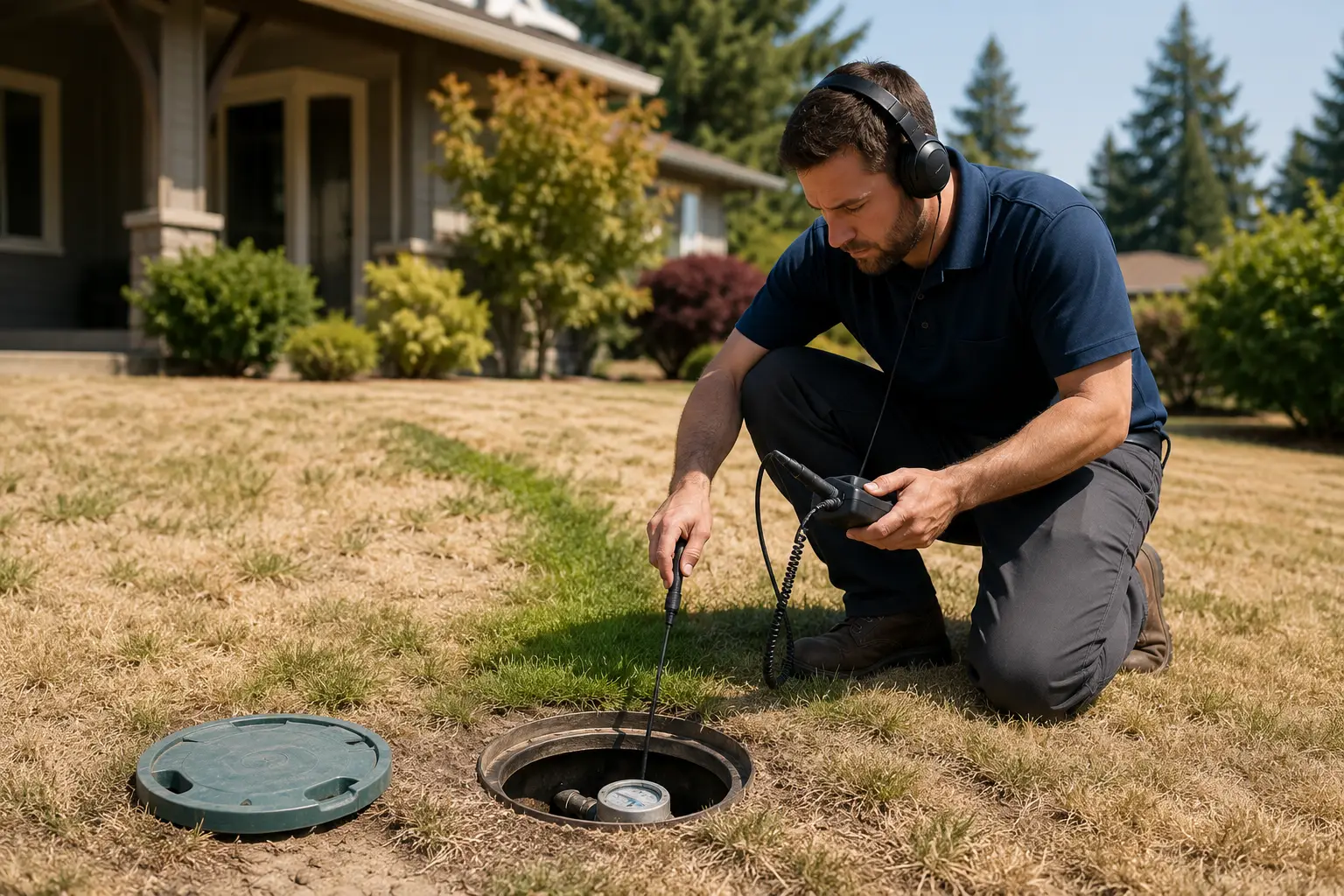
The good news is that a leak almost always announces itself well before the deck cracks, if you know what to watch for. Soggy ground that won’t dry, an auto-fill valve that runs constantly, a water bill that’s crept up, or that telltale strip of extra-green grass are all signs the leak is feeding your soil long before the concrete starts to move. We cover the full list in our guide to the five signs your pool has a leak.
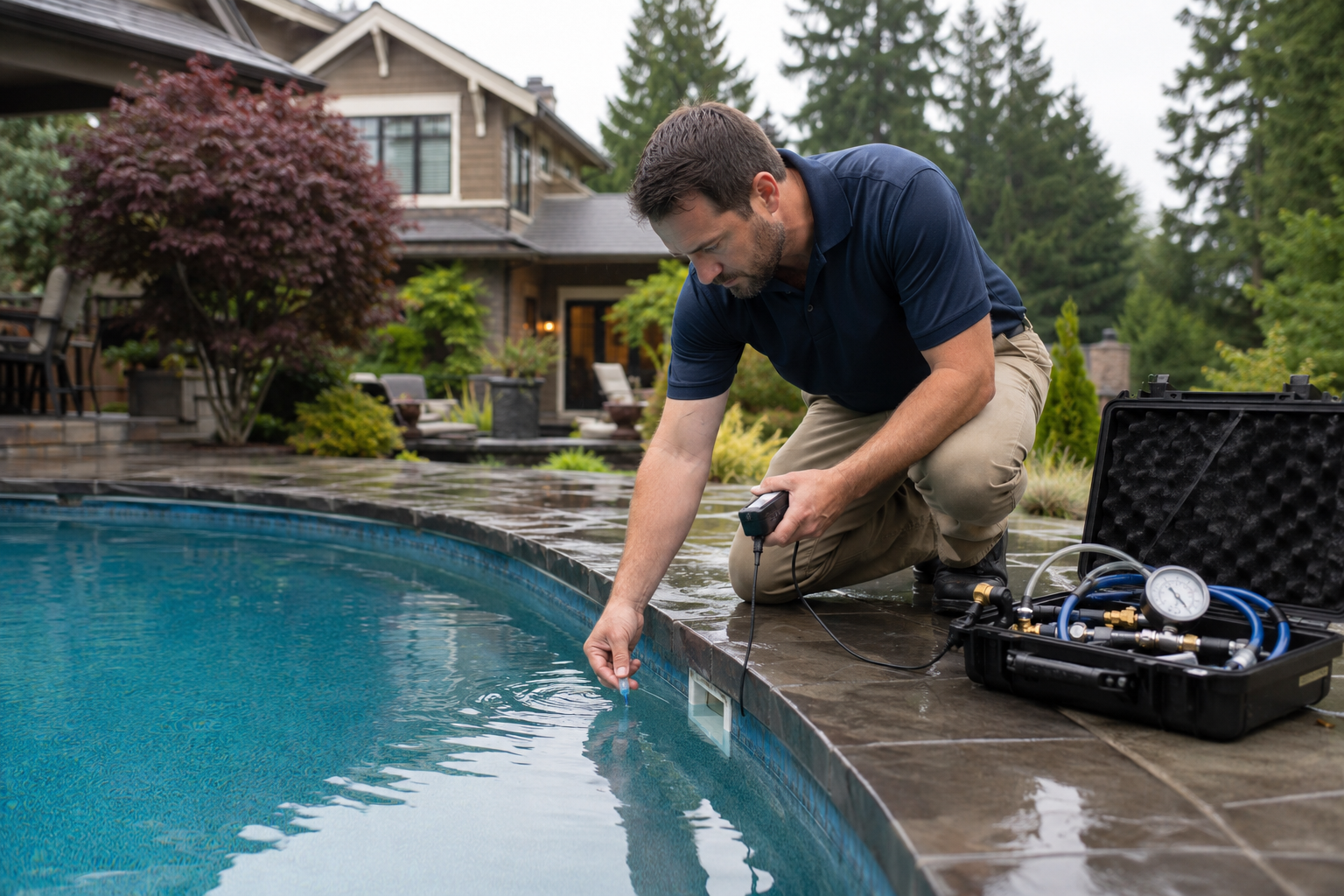
When a leak is suspected, a professional can pinpoint exactly where the water is escaping, down to a specific fitting or length of buried pipe, without draining the pool or tearing up the deck to look. If you’d like to understand what that involves, we walk through it in our post on how a pro actually finds a pool leak. The point is that the diagnosis is the easy, inexpensive part. The deck and yard damage is the expensive part, and it’s the part you can still avoid if you act while the evidence is still just wet ground.
Protect the Whole Backyard, Not Just the Pool
A pool leak is rarely only about lost water. Left alone, it’s a slow erosion problem working against everything you’ve built around your pool, the deck, the patio, the landscaping, and in the worst cases the house itself. The water you can’t see is the water doing the damage.
If you’ve noticed cracking, sinking, soggy ground, or pavers that no longer sit level around your pool, don’t start with the concrete. Start with the cause. Call Action Leak Detection at (360) 922-8829. We locate pool leaks precisely and non-invasively for pool owners throughout King, Snohomish, Skagit, Whatcom, Island, and San Juan counties, so the repair fixes the real problem instead of resurfacing it.
Find the leak now, and the only thing your deck settles into is staying right where it belongs.
Action Leak Detection serves Whatcom, Skagit, Snohomish, King, Island, and San Juan counties. We answer 24/7, including weekends and holidays.