This summer, water conservation stopped being optional advice and became a statewide reality.
In April 2026, the Washington Department of Ecology declared a drought for every watershed in the state, the fourth consecutive year under drought conditions, driven by a warm winter that left the mountains nearly bare of snowpack. Utilities across the region have moved to voluntary conservation, and homeowners are being asked to think hard about every gallon they use.
So people do the obvious things. Shorter showers. Fuller dishwasher loads. Watering the lawn less often. All of it helps. But here’s the uncomfortable truth most conservation checklists leave out: the largest single source of wasted water in many homes isn’t anything a homeowner is choosing to do. It’s a leak they don’t know they have, running silently around the clock, indifferent to how short their showers are. In a drought year, that hidden waste is the one worth finding first.
The Water Waste Nobody’s Counting
Household leaks are not a rounding error. According to the EPA’s WaterSense program, the average home wastes more than 10,000 gallons of water every year to leaks, and ten percent of homes leak 90 gallons a day or more. Nationwide, easy-to-fix household leaks waste more than one trillion gallons of water annually, the equivalent of the yearly water use of millions of homes, lost to drips and cracks nobody ever noticed.
The reason this waste flies under the radar is that it’s invisible by definition. A dripping faucet you can at least hear. But a leak in a buried supply line between the meter and the house, a crack in a pool’s underground plumbing, or a broken irrigation fitting under the mulch produces no sound, no puddle you’d notice, and no obvious signal, until the water bill arrives or the ground gives it away. The water just disappears into the soil, day after day, while the household above dutifully takes shorter showers.
In a normal year, that’s a wallet problem. In a fourth straight drought year, it’s a community one.
Outdoor Water Is Where the Big Losses Hide
Summer shifts water use outdoors, and that’s exactly where the largest and least-noticed waste tends to live.
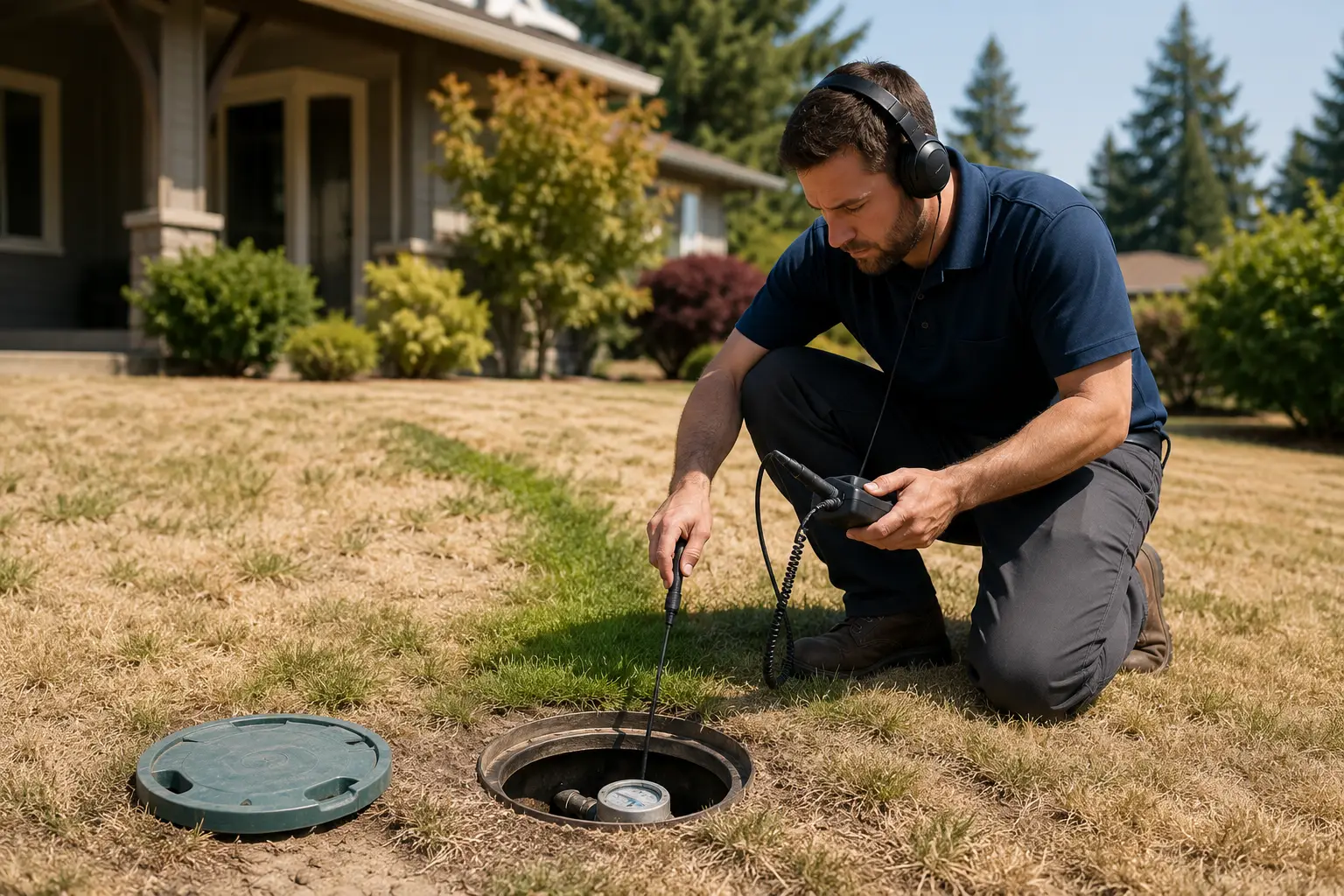
Start with irrigation. The EPA estimates that as much as 50 percent of the water used outdoors is lost to wind, evaporation, and runoff from inefficient systems, and a single automatic irrigation system that isn’t properly maintained can waste up to 25,000 gallons of water a year. A cracked lateral line, a broken sprinkler head hidden in tall grass, or a valve that doesn’t fully close can pour water into the ground every cycle without ever announcing itself, because it’s happening at 4 a.m. while you’re asleep and draining underground where you’ll never see it pool.
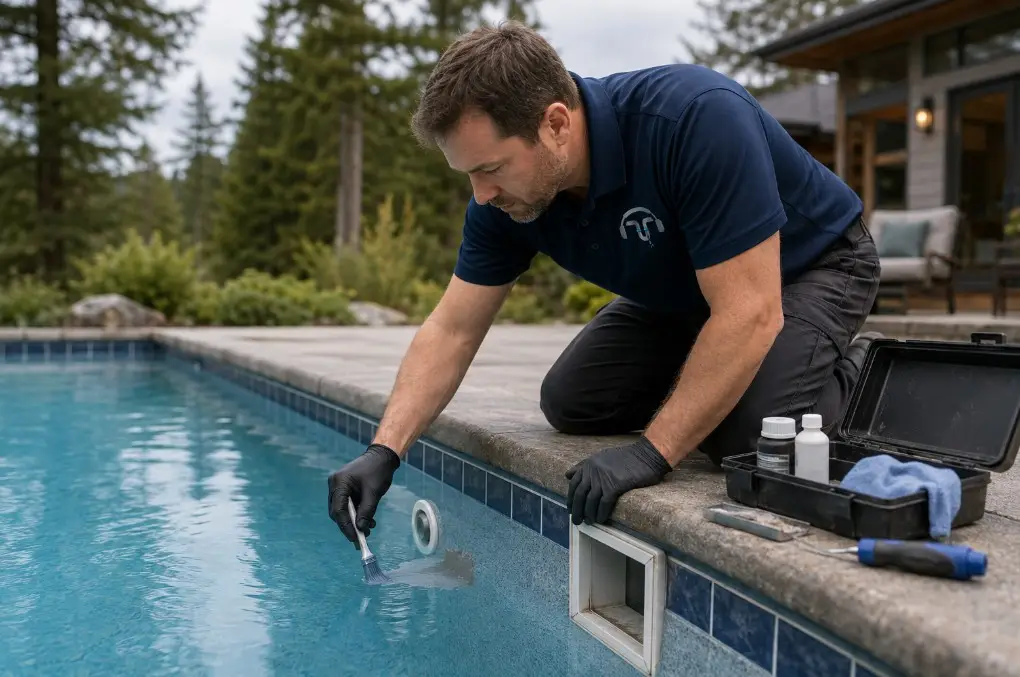
Then there are pools. A pool losing even a modest amount to a leak can shed tens of thousands of gallons over a single Washington summer, and because many pools have auto-fill valves that quietly top the water back up, the loss is masked completely. The pool looks full. The auto-fill just runs a little more often. We covered how to spot this in our guide to the five signs your pool has a leak, but the short version is that a leaking pool can be one of the single largest water wasters on an entire residential property, and one of the hardest to notice.
Add in underground supply lines, the buried pipe carrying water from your meter to your home, and you have three major outdoor systems, all of them underground, all capable of leaking silently for months.
Why This Matters More in the Pacific Northwest
There’s a particular irony to a drought in western Washington, a region most people associate with rain. But our water supply doesn’t come from summer rainfall. It comes from winter snowpack melting slowly through the dry season, and when the snowpack fails, as it has four years running, the summer shortfall is real regardless of how green things look.
Our soils make the hidden-leak problem worse, too. Much of the region sits on clay-heavy ground with high seasonal water tables, which means leaking water doesn’t drain away and evaporate the way it might in sandy soil. It lingers underground, so a leak that would announce itself as an obvious wet patch elsewhere can stay hidden here, quietly saturating the ground while continuing to waste water. The same conditions that hide the leak are the ones that let it run longest.
For a homeowner trying to conserve in good faith during a drought, that’s a frustrating combination: the biggest waste is the hardest to see, and our local conditions make it harder still.
What You Can Actually Do About It
The good news is that finding hidden water waste doesn’t require guesswork. A few simple checks can tell you whether you have a problem worth investigating.
Read your meter. Pick a stretch of an hour or two when no water is being used indoors or out, turn everything off, and check your water meter at the start and end. If the meter has moved, water is going somewhere it shouldn’t. This is the single most useful DIY test a homeowner can run, and it costs nothing.
Watch your bill for a trend. A one-month spike can be a fluke. A steady, unexplained climb month over month, especially heading into summer, is a classic signature of a developing leak rather than seasonal use.
Audit your irrigation. Run each zone in daylight and walk it. Look for heads that don’t retract, geysers, dry patches (a sign of a break starving the rest of the zone), and soggy areas that stay wet between cycles.
Mind the pool. If you have one, keep an eye on how often the auto-fill runs and whether the water drops faster than evaporation alone would explain.
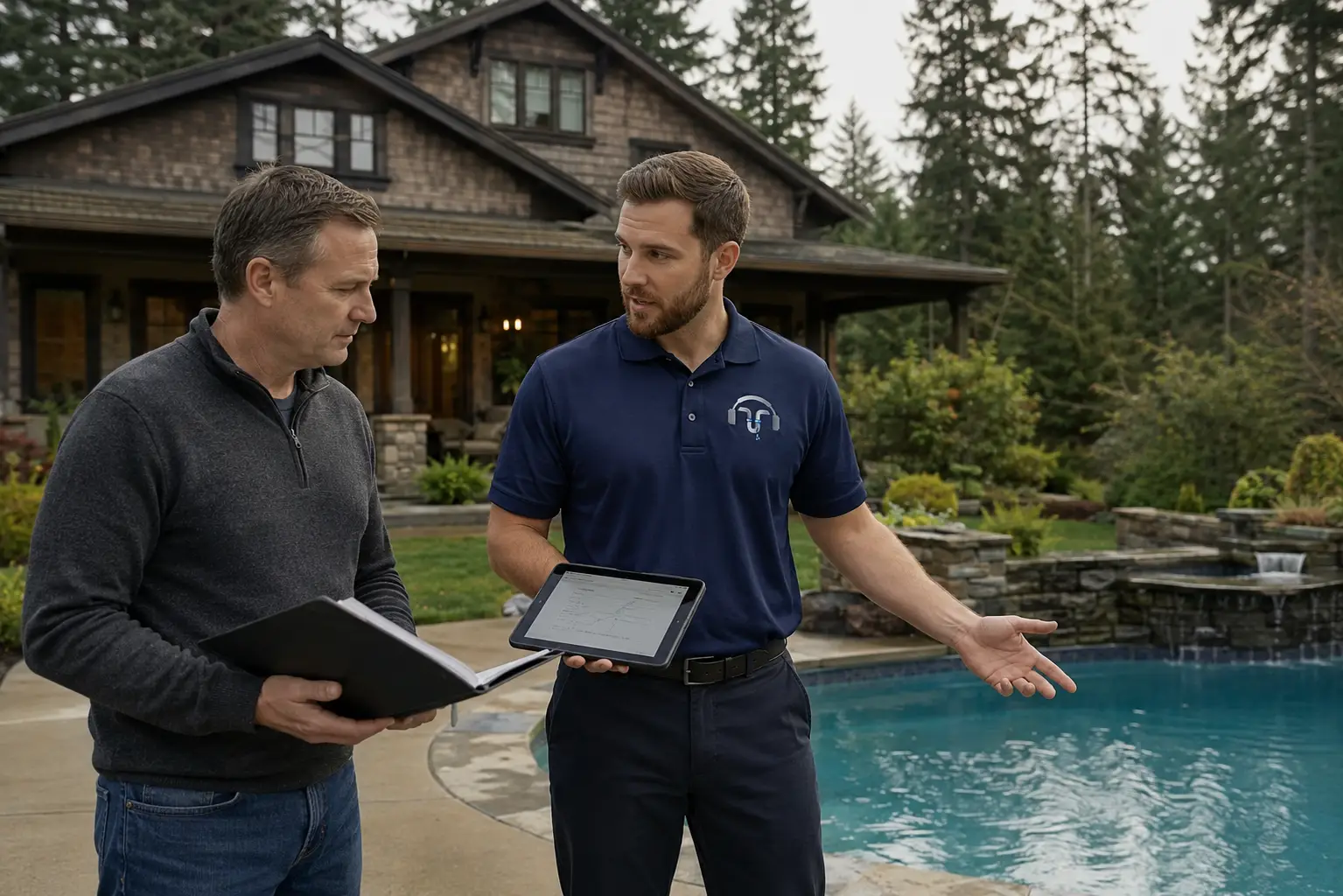
When those checks point to something you can’t see, that’s where professional detection comes in. Acoustic listening equipment, pressure testing, and thermal imaging can pinpoint a hidden leak, in a supply line, an irrigation system, or a pool, down to a specific spot, without digging up the yard to find it. In a drought year, stopping a leak that’s been quietly wasting 90 gallons a day is one of the most meaningful conservation moves a household can make, worth more than a summer of shorter showers combined.
Conservation Starts With What You Can’t See
Every drop-saving habit is worth keeping, and in a fourth straight drought year, they matter more than ever. But the households making the biggest real difference this summer are the ones who go looking for the waste they can’t see, the silent leak underground that no amount of careful faucet use will offset.
If your water bill has been creeping up, your irrigation seems thirstier than it should be, or your pool never quite stays full, don’t write it off as summer. Find out where the water is going. Call Action Leak Detection at (360) 922-8829. We locate hidden leaks in supply lines, irrigation systems, and pools, precisely and non-invasively, for homeowners throughout King, Snohomish, Skagit, Whatcom, Island and San Juan counties.
In a drought, the most valuable water you’ll save is the water you didn’t know you were losing.
Action Leak Detection serves Whatcom, Skagit, Snohomish, King, Island and San Juan counties. We answer 24/7, including weekends and holidays.