Uncover Hidden Water Leaks and Save Money with a Simple Meter Check
A sudden spike in your water bill is often the first and only sign of a hidden leak. For homeowners in Washington, an unnoticed leak can lead not just to wasted water and money, but also to significant property damage, including foundation issues and mold growth. Learning how to read your water meter is a powerful first step in proactive home maintenance. This simple skill empowers you to quickly determine if your property has a hidden leak, allowing you to take action before minor issues become major disasters. This guide will walk you through the process step-by-step.
Where to Find Your Water Meter in Washington
Before you can check for a leak, you need to locate your water meter. In most Washington homes, especially in areas like Whatcom and Skagit counties, the meter is typically found in one of these locations:
- Near the Street: Look for a concrete or plastic box embedded in the ground near the curb or sidewalk. The lid may be marked “WATER.” You might need a screwdriver or a specific meter key to open it. Be cautious of insects or debris inside.
- In a Basement or Crawl Space: In some older homes, the meter may be located inside, usually where the main water line enters the house.
- In a Utility Closet: In townhouses or condominiums, the meter could be in a shared or private utility closet.
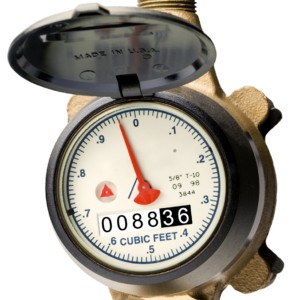
Once located, familiarize yourself with its face. Most meters have a large sweep hand that measures gallons and a digital or analog odometer-style display showing total consumption, similar to a car’s mileage tracker.
How to Perform a Static Water Meter Test: A Quick Check for Leaks
This test takes only a few minutes and is the most reliable way to confirm a leak somewhere in your system. Follow these simple steps:
Step 1: Stop All Water Use. Ensure that every water-using fixture and appliance in your home is turned off. This includes faucets, showers, dishwashers, washing machines, and irrigation systems. Make sure no toilets are running.
Step 2: Locate the Leak Indicator. Most meters have a small, sensitive indicator—often a red or black triangle, a star, or a small gear. This dial is designed to spin even with very low water flow.
Step 3: Watch the Indicator. With all water turned off, watch the leak indicator for at least 2-3 minutes. If it is spinning, twitching, or moving at all, you have a leak. If it’s perfectly still, you likely do not have an active leak.
Step 4 (Alternative Method): If your meter doesn’t have a visible leak indicator, use the main dial. Write down the exact numbers on the odometer. Wait for one to two hours without using any water, then check the reading again. If the number has increased, water is flowing somewhere on your property.
Pinpointing Common Household Leaks
If your meter test indicates a leak, start by checking the most common culprits. These simple DIY tests can help you locate the source without professional tools.
The Toilet Dye Test
A running toilet is a frequent cause of high water bills. To check for a silent leak, add a few drops of food coloring to the toilet tank. Do not flush. Wait for about 15-20 minutes. If any of the color appears in the toilet bowl, the flapper valve in the tank is faulty and needs to be replaced.
Inspect Other Fixtures
Visually inspect all accessible plumbing. Check under sinks for drips, examine faucet bases, and look at the connections for your washing machine and dishwasher. Don’t forget to check outdoor hose bibs. Also, walk your property to look for unusually green or soggy patches, which could indicate a problem with your irrigation system.
What if Your Meter is Running but You Can’t Find the Leak?
This is a frustrating scenario, but it provides valuable information. If your water meter confirms a leak, but all your fixtures, toilets, and visible pipes are fine, the problem is likely hidden from view. The most common sources are:
- Underground Water Line Leaks: The main service line running from the meter to your house can develop cracks or breaks due to shifting soil, root intrusion, or corrosion. These hidden water leaks are impossible to see without specialized equipment.
- Concrete Slab Leaks: Many homes in Washington are built on a concrete slab foundation. Water lines running beneath or within the slab can leak, silently causing foundational damage, warping floors, and promoting mold. Discovering concrete slab leaks early is crucial to protecting your home’s structural integrity.
Attempting to find these leaks yourself can lead to destructive and expensive guesswork. This is when professional intervention is necessary.
The Next Step for Homeowners in Whatcom, Skagit, & Snohomish Counties
If you suspect an underground or slab leak, the next step is to call a specialist. Action Leak Detection provides non-invasive leak detection services across Northwest Washington, from Bellingham to Everett. Instead of digging up your yard or breaking through your foundation, we use advanced technologies like acoustic listeners, tracer gas, and infrared thermal imaging to pinpoint the exact location of the leak. This precise approach saves you time, money, and protects your property from unnecessary damage.
Suspect a Hidden Leak? Don’t Wait for Damage to Show.
Protect your property and your wallet. Our team is available 24/7 to locate your leak quickly and accurately with state-of-the-art, non-invasive technology.
Frequently Asked Questions
How often should I check my water meter for leaks?
It’s a good practice to perform a quick meter check every few months, and especially if you receive an unusually high water bill. A regular check can help you catch leaks before they cause serious damage.
What’s the difference between a digital and an analog water meter display?
Analog meters use a series of dials and a large sweep hand, much like a clock. Digital meters provide a simple numerical readout. Both types will have a leak indicator or a flow-rate display that shows if water is actively being used.
Can a very small leak really cause that much damage?
Absolutely. A leak that drips just once per second can waste over 3,000 gallons of water per year. If that leak is hidden within a wall or under your foundation, it can lead to wood rot, mold, and costly structural repairs over time.
Why is professional leak detection better than just calling a plumber to dig?
Traditional methods often involve educated guesses and “search-and-destroy” digging, which is destructive and expensive. Professional non-invasive leak detection uses technology to pinpoint the exact leak location first, meaning repairs are targeted, less disruptive, and more cost-effective.
Key Leak Detection Terms
Leak Indicator: A small dial on a water meter (often a triangle or star) that moves to show even the slightest water flow, helping to confirm an active leak.
Slab Leak: A water leak occurring in a pipe located beneath or within the concrete foundation of a building.
Non-Invasive Detection: A group of advanced methods, including acoustics and infrared thermography, used to find leaks without digging or demolishing property.
Tracer Gas: A safe, non-toxic mixture of hydrogen and nitrogen that is injected into a pipe system. The gas escapes at the leak point and can be detected at the surface, revealing the precise location.