Ask three pool owners where their leak turned out to be and you’ll likely get three completely different answers. That’s not a coincidence. The material your pool is built from doesn’t just affect how it looks or how it’s maintained, it fundamentally changes where a leak is most likely to start.
A vinyl liner pool fails differently than a fiberglass shell, which fails differently than a concrete or gunite pool. Knowing which category your pool falls into, and where that type is statistically most vulnerable, won’t fix a leak on its own, but it gives you a real head start on knowing what to look for and what to expect from a detection visit. Here’s how the three main pool types compare.
Vinyl Liner Pools: The Most Leak-Prone by Design
Vinyl liner pools have the most potential leak points of the three types, and the reason comes down to construction. A vinyl liner isn’t a single sealed shell. It’s a large sheet of material with numerous seams, and every fitting that penetrates it, the skimmer, the main drain, the steps, the lights, the return jets, is a separate potential failure point sitting underwater.
The most common leak sources in a vinyl pool include:
- Seam failures, where the liner’s factory or field-welded seams separate over time
- Punctures or tears, often near the edges where the liner attaches at the top of the pool, or from sharp debris or pool toys
- Fitting gaskets, particularly around the main drain, steps, swim-outs, and wall return fittings, which rely on gaskets that degrade with age
- Skimmer connections, one of the single most frequently cited leak locations in vinyl pools, where the liner meets the skimmer body
Because vinyl liners age, stretch, and eventually need replacement on their own maintenance schedule, distinguishing a small liner leak from normal wear can be tricky without the right equipment. The upside is that vinyl liner leaks are often among the easier types to repair once located, sometimes with an underwater patch, without draining the pool.
Fiberglass Pools: Fewer Leak Points, But Not Leak-Proof
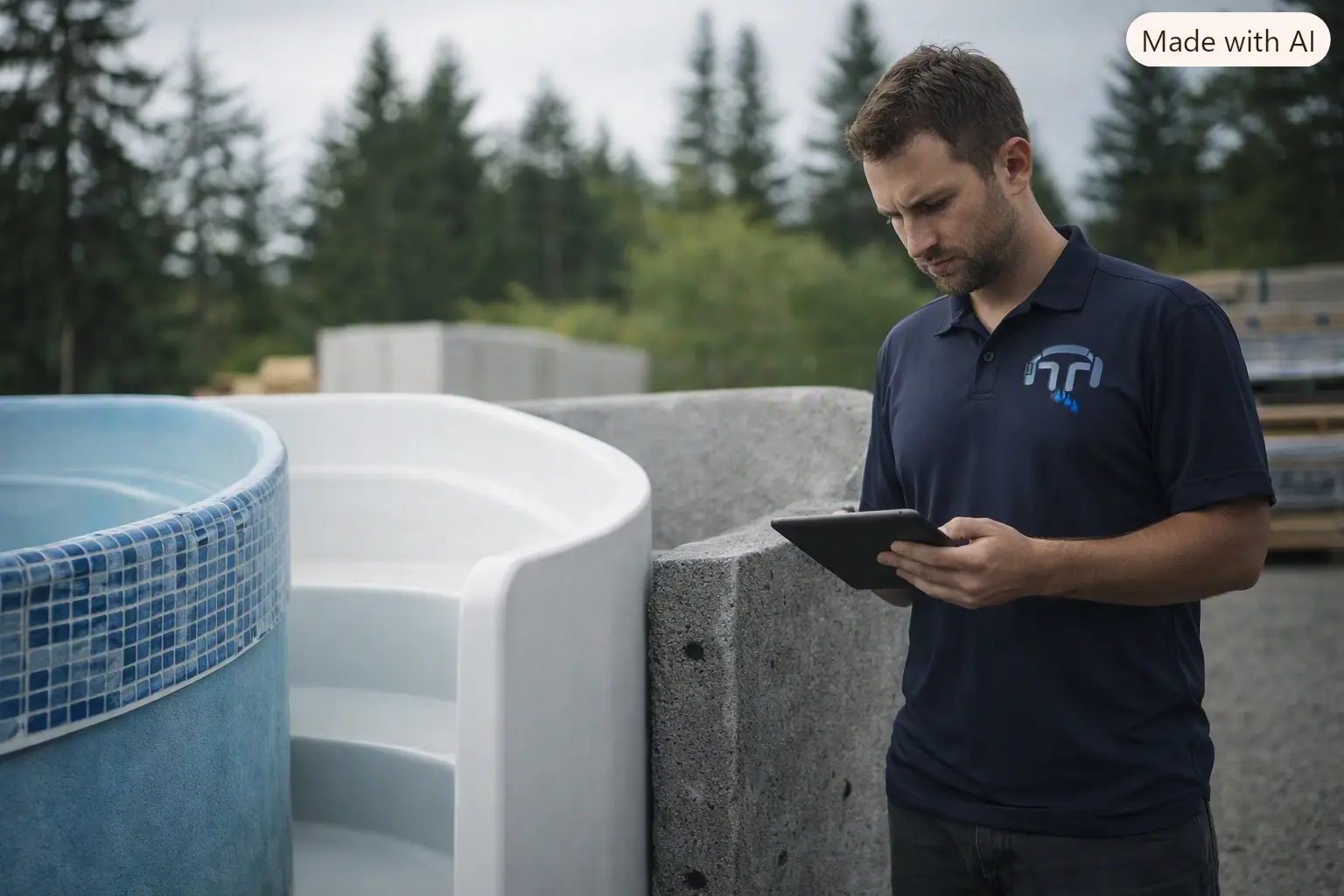
Fiberglass pools are generally the least prone to leaking of the three types, and the reason is structural. A fiberglass shell is molded as a single, seamless piece, so there are no liner seams and far less flexing than a rigid concrete structure. The material has enough flex to move slightly with ground conditions without cracking the way concrete can.
That doesn’t mean fiberglass pools are immune. The leaks they do develop tend to cluster around a small number of predictable spots:
- Fittings, where lights, returns, and skimmers penetrate the shell. Manufacturers cut the shell to the exact size of each fitting and seal it with silicone, and that silicone seal is the weak point that can eventually fail, not the shell itself
- Light niches, a particularly common trouble spot where the fixture meets the fiberglass
- Plumbing connections at the equipment pad, where pipes join the shell’s returns and suction lines
Because fiberglass pools have so few potential leak points, a leak here is often easier to pin down once you know to focus on the fittings rather than searching the shell itself for hairline cracks. When the shell does crack, it’s typically due to a manufacturing defect, an installation issue, or significant ground movement, rather than routine wear.
Concrete and Gunite Pools: Built to Last, But the Most Vulnerable to Cracking
Concrete and gunite pools are the most durable and customizable of the three, and they’re also the type most susceptible to structural cracking. Concrete is rigid and doesn’t flex, so when the ground beneath or around it moves, the shell can develop cracks rather than absorb the movement the way fiberglass does.
The leak points to know about in a concrete or gunite pool include:
- Structural cracks in the shell, often caused by shifting soil, natural settling, or the original construction. Cracks along the tile line are a particularly serious location, since they can widen and worsen over time
- The plaster or pebble finish, which sits over the structural shell and can develop its own cracks separate from the concrete beneath it
- Skimmer connections, especially where the plastic skimmer body meets the surrounding concrete or plaster, a joint between two very different materials that expand and contract at different rates
- Returns, lights, and main drains, the same fitting-related leak points every pool type shares, made more complex here by the surrounding plaster finish
Because a concrete pool’s structural cracks can be a symptom of ground movement rather than the leak’s true origin, tracking one down sometimes means looking at what’s happening in the soil around the pool as much as the crack itself. We covered how drought and wet-season soil movement stress underground structures in our post on how a dry summer triggers slab leaks, and the same forces that stress a home’s foundation can stress a concrete pool shell.
The One Leak Point Every Pool Type Shares
Regardless of what your pool is made of, there’s one category of leak that applies equally to all three: the underground plumbing. The buried supply and return lines running between your pool and the equipment pad are made of the same pipe and fittings no matter what the pool shell itself is built from, and they fail for the same reasons everywhere, pipe joint failure, root intrusion, ground settling, or age.
This is why a full leak investigation never stops at the shell. Even a fiberglass pool with a nearly leak-proof shell can lose significant water through a cracked underground return line that has nothing to do with the pool material at all.
Why Knowing Your Pool Type Helps a Technician Find the Leak Faster
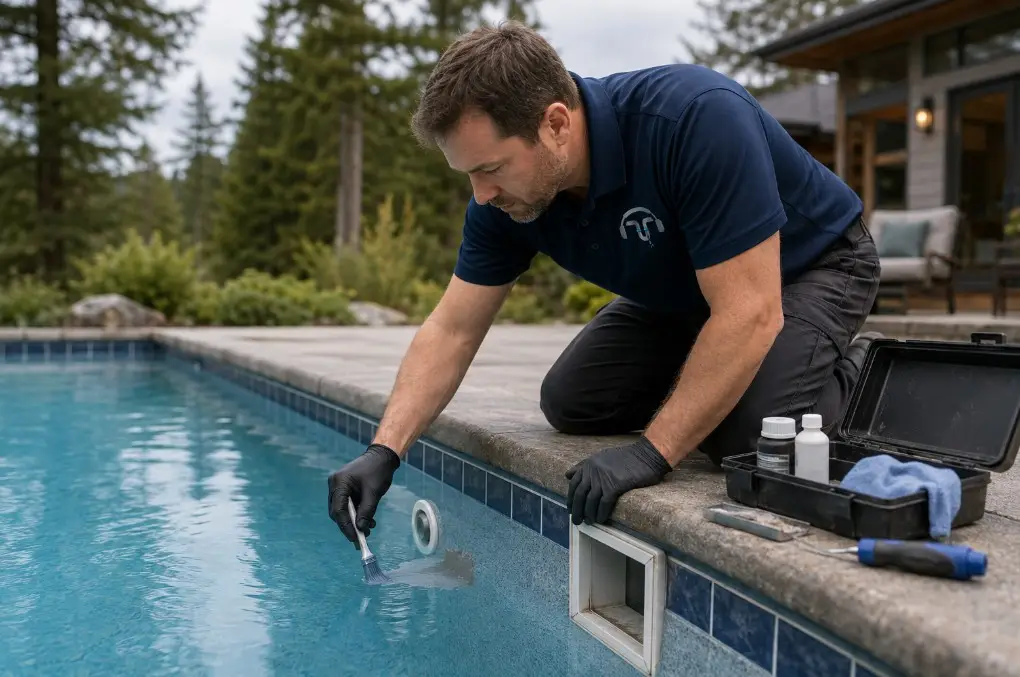
Pool type doesn’t just predict where a leak is likely to be, it shapes the detection approach itself. A technician investigating a vinyl liner pool starts by checking seams, gaskets, and skimmer connections with dye testing, since those are the statistically likely culprits. On a fiberglass pool, attention goes straight to the fittings and light niche rather than searching a shell that rarely cracks on its own. On a concrete pool, the process often includes assessing whether a crack is cosmetic or structural, and whether ground movement is a contributing factor, before deciding where to test.
Knowing your pool type before you call doesn’t replace professional dye testing, pressure testing, and acoustic detection, but it does help frame the investigation and can shorten the time it takes to zero in on the actual source.
Find the Leak, No Matter What Your Pool Is Made Of
Vinyl, fiberglass, and concrete pools each have their own weak points, but every one of them can be diagnosed accurately without draining the pool or guessing where to dig. Understanding your pool type is a useful head start. Professional detection is what turns that head start into a confirmed answer.
If your pool is losing water and you’re not sure whether it’s the liner, the shell, or the plumbing, call Action Leak Detection at (360) 922-8829. We locate leaks precisely and non-invasively in vinyl, fiberglass, and concrete pools for owners throughout King, Snohomish, Skagit, Whatcom, Island, and San Juan counties.
Whatever your pool is built from, we’ll tell you exactly where it’s letting you down.
Action Leak Detection serves Whatcom, Skagit, Snohomish, King, Island, and San Juan counties. We answer 24/7, including weekends and holidays.