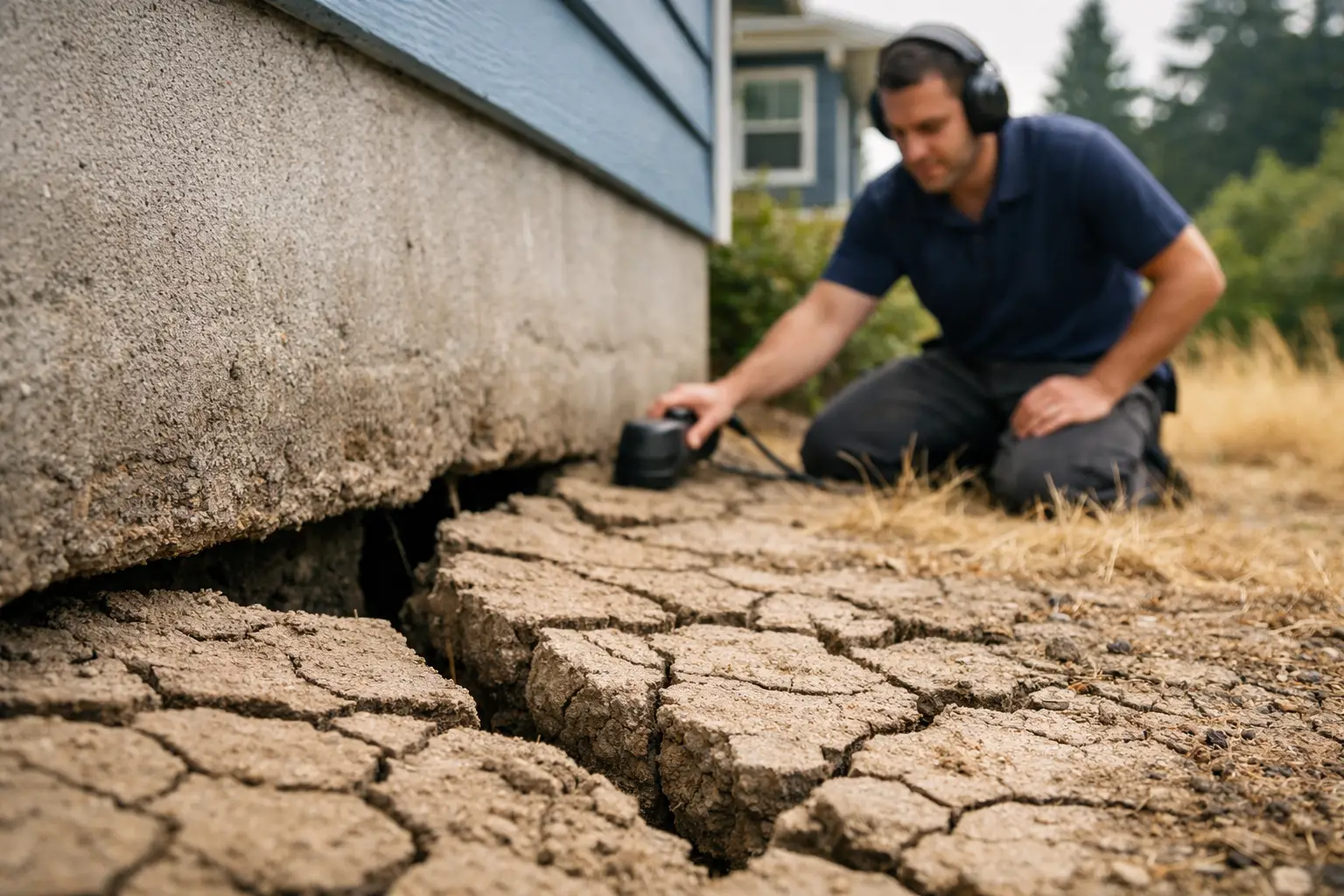
Most people think of leaks as a winter problem. Frozen pipes, storm-driven ground saturation, the burst line in January. But some of the most damaging leaks a Washington home can develop start in the exact opposite conditions: a hot, dry, rain-starved summer like the one we’re in now.
The culprit isn’t the heat directly. It’s what the heat does to the ground underneath your house. In a drought, the soil that supports your foundation and cradles your buried water lines dries out, shrinks, and moves, and that movement puts slow, relentless stress on the rigid pipes locked into and beneath your slab. By late summer, that stress can be enough to open a joint or crack a line, producing a slab leak or an underground leak that seems to come out of nowhere. With Washington now in its fourth consecutive drought year, this is a risk more local homeowners will run into than usual. Here’s how it happens, and what to watch for.
The Shrink and Swell Cycle Beneath Your Home
Soil is not the solid, stable thing it appears to be. Clay-rich soils in particular behave almost like a sponge: they swell as they absorb water in the wet season and shrink as they dry out. Geologists call this the shrink-swell cycle, and it’s one of the most significant causes of ground movement under buildings.
During a normal Pacific Northwest year, our wet winters keep that clay saturated and expanded for months. But a prolonged dry summer reverses it. As the drought deepens, moisture loss reaches further down into the ground, and the clay physically shrinks in volume, pulling away from the underside of the concrete slab and from around the pipes buried in it. Where the soil was once packed tight against everything, small voids and gaps begin to open.
This matters because a foundation and its plumbing are only as stable as the ground holding them. When that ground contracts and shifts, everything anchored in it is put under strain.
How Soil Movement Becomes a Slab Leak
Here’s the part most homeowners never connect. Your home’s water lines aren’t floating freely. Sections of pipe are locked rigidly into the concrete slab or anchored in the soil beneath it, while other sections run through ground that may be more stable.
When drought-shrunken soil lets one part of the slab settle into a new void while another part stays put, the pipes locked into the concrete are dragged along with the movement, while sections anchored elsewhere resist it, creating powerful bending and shearing forces on the pipe. Pipe joints and fittings are the weak points, and over a summer of steady soil contraction, that repeated stress is enough to crack a line or pull a joint apart. The result is a slab leak: water escaping from a pressurized line beneath your concrete floor, or an underground leak in the supply and drain lines running through the yard.
The scale of this problem nationally is striking. Expansive soils damage roughly one in four homes in the U.S., with yearly costs exceeding all other natural disasters combined. Most people never realize the soil under their feet is the cause.
Why Western Washington Isn’t Immune
It’s tempting to file this under “a Texas problem.” The dramatic expansive-clay foundation stories tend to come from the Sun Belt. But western Washington has plenty of clay-rich ground, and our situation has a particular twist.
Much of the region sits on clay-heavy soils with high seasonal water tables. For most of the year those soils stay wet and expanded, which is exactly why a dry summer here can be more disruptive than a dry summer somewhere that’s arid year-round. Our ground isn’t used to drying out. When a drought year pulls the moisture out of soil that spends most of its life saturated, the change in volume, and therefore the movement, can be significant. The soil swells all winter and then, in a drought summer, shrinks harder than it normally would, and it’s that swing between the two states that stresses slabs and pipes the most.
Four straight drought years compound this. Each dry season pulls moisture deeper and lets the ground move a little more, and homes that shrugged off previous summers may reach the point this year where a stressed pipe finally gives.
The Warning Signs of a Summer Slab or Underground Leak
Slab and underground leaks are sneaky because the water is hidden beneath concrete or several feet of soil. But they do leave signs. Watch for:
- A spike in your water bill with no change in your household’s usage, one of the most reliable early indicators of a hidden pressurized leak
- The sound of running water when every fixture in the house is off
- A warm spot on the floor, which can indicate a leak in a hot water line beneath the slab
- Unexplained damp spots, or conversely, cracks appearing in floors, drywall, or exterior walls as the foundation moves
- A drop in water pressure that develops over days or weeks
- New cracks in the foundation, driveway, or interior walls, or doors and windows that suddenly stick, all signs the foundation itself is moving with the soil
A single one of these can have an innocent explanation. Two or more appearing together during a dry stretch is worth investigating, because a leak the size of a small crack can waste over 250 gallons of water a day while it quietly undermines the ground further.
Why You Can’t Just Wait for Winter Rain to Fix It
There’s a tempting logic that says if drought caused the problem, the return of the rains will reverse it. The soil re-swells, the slab lifts back, the pressure comes off the pipe. Unfortunately, it doesn’t work that cleanly.
Once a pipe has cracked or a joint has pulled apart, the damage is done, and the re-wetting of the soil in fall and winter often makes things worse, not better, because now you have swelling ground pushing against a slab that already settled unevenly. The seasonal swing that opened the leak keeps working the damaged pipe. And a slab leak feeding water into the ground beneath your home during our wet months adds saturation on top of saturation, which is its own path to wood decay and structural trouble. A leak that starts in the dry season doesn’t heal in the wet one. It compounds.
Finding a Hidden Leak Without Tearing Up the House
The good news is that locating a slab or underground leak no longer means jackhammering the floor or trenching the yard to find it. Professional detection uses acoustic listening equipment sensitive enough to hear pressurized water escaping beneath concrete, pressure testing to isolate which line has failed, and thermal imaging to confirm the location, all before any concrete is opened. The goal is the same one we bring to every leak: pinpoint the exact spot first, so the repair is small and targeted instead of exploratory.
If you’d like to understand how that process works on a pool or plumbing system, we cover it in our post on why slab leak detection protects your foundation, and you can learn more about our approach on our slab leak detection page.
Don’t Let a Dry Summer Undermine Your Foundation
A slab or underground leak that starts in a drought summer is easy to miss and expensive to ignore. The water hides beneath the floor or the yard, the cause hides in soil movement most people never think about, and the damage compounds quietly into fall. Catching it early, while it’s still a rising water bill and a faint sound of running water, is what keeps it from becoming a foundation repair.
If your water bill has jumped, you’re hearing water when everything’s off, or you’ve noticed new cracks or sticking doors this summer, don’t wait for the rain to sort it out. Call Action Leak Detection at (360) 922-8829. We locate slab and underground leaks precisely and non-invasively for homeowners throughout King, Snohomish, Skagit, Whatcom, Island, and San Juan counties.
The ground moves whether you’re watching or not. We’ll find out what it’s done to your pipes before it costs you the foundation.
Action Leak Detection serves Whatcom, Skagit, Snohomish, King, Island, and San Juan counties. We answer 24/7, including weekends and holidays.