You’ve packed the bags, stopped the mail, and asked a neighbor to keep an eye on the place. But the thing most likely to ruin your trip isn’t a break-in or a missed flight. It’s a plumbing failure in an empty house, running unnoticed for days while you’re four states away.
A supply line, a water heater, or a toilet valve that fails while you’re standing in the kitchen is a five-minute annoyance. The same failure in an unoccupied home is a catastrophe, because there’s no one to hear it, see it, or shut it off. Water that would have been mopped up in minutes instead pours into the structure for hours or days. This summer, with Washington in its fourth straight drought year and utilities asking everyone to conserve, a leak running the whole time you’re gone is both a flooding risk and pure wasted water. The good news is that leak-proofing your home before you leave takes about fifteen minutes, and it’s the highest-value thing you can do before you lock the door.
Why an Empty House Is a Leak’s Best Opportunity
Water damage is one of the most common and costly problems a homeowner faces. Water damage ranks among the most frequent homeowners insurance claims, and the reason unoccupied homes fare so badly is simple: time. A leak’s damage is a function of how long it runs, and an empty house removes the one thing that normally stops a leak early, a person noticing it.
Consider the math. A leak as small as one-eighth of an inch can waste over 250 gallons of water in a single day, and a full supply-line or appliance-hose failure moves far more than that, continuously, for as long as the water is on. A washing machine hose or under-sink line that bursts on the day you leave for a two-week trip doesn’t spill a bucket. It can pump thousands of gallons into your floors, walls, and crawl space before you ever get home.
The failures that cause this are ordinary. Braided washing machine hoses, water heater tanks, refrigerator ice-maker lines, toilet fill valves, and dishwasher connections all fail on their own schedule, not yours. You can’t predict them, but you can make sure that if one lets go while you’re away, there’s no water behind it to do the damage.
The Single Most Important Step: Shut Off the Main
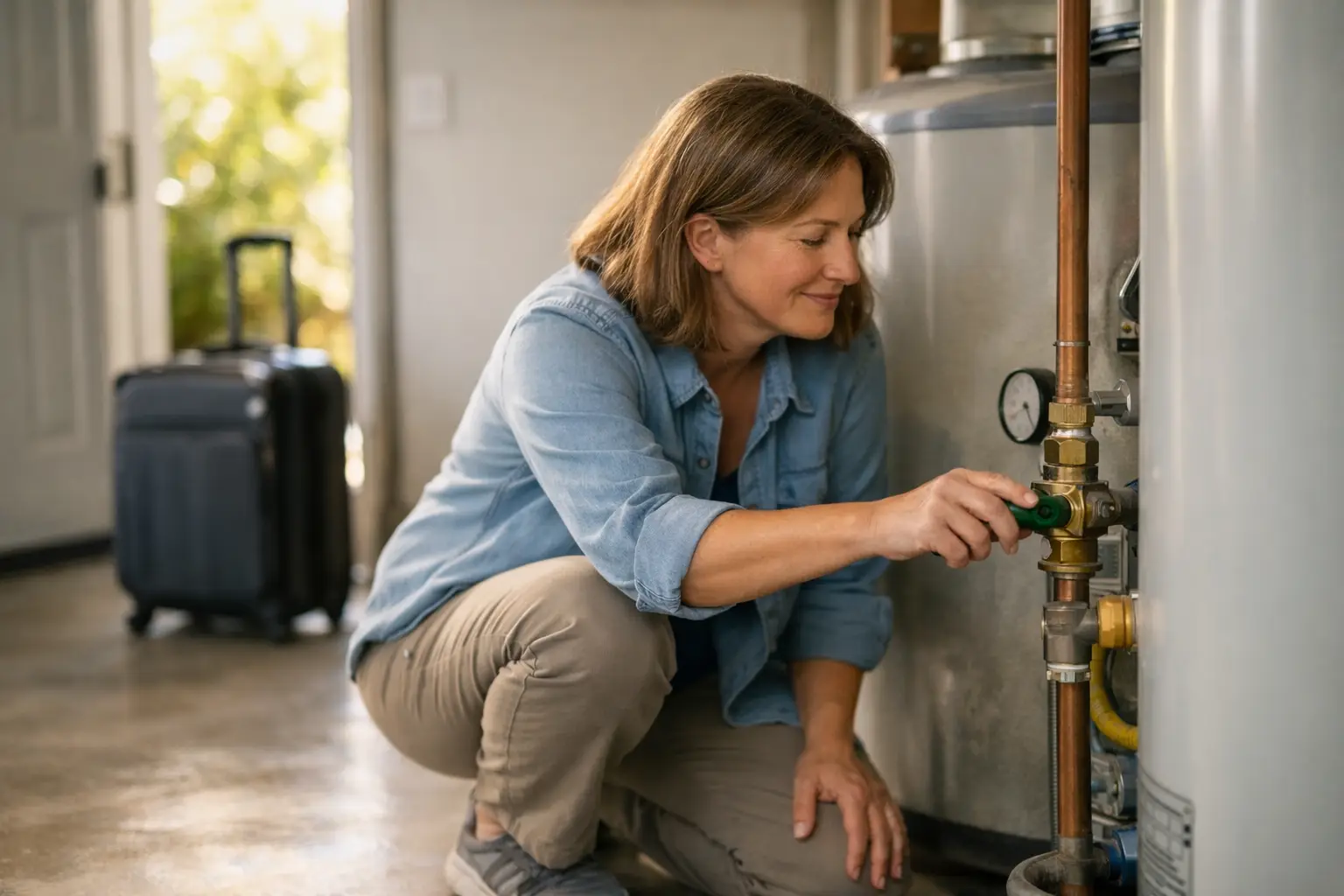
If you do only one thing before a trip, do this: turn off the water at the main shut-off valve. Once the main is closed, the only water that can escape a failed line is the small amount already in the pipes, not the effectively unlimited supply from the street. It’s the difference between a damp spot and a flooded house.
A few practical notes:
- Find and test the valve before you need it. Your main shut-off is usually where the water line enters the home, in a basement, crawl space, garage, or an exterior box near the meter. Locate it now, and turn it to confirm it actually stops the flow. Old valves sometimes seize or don’t fully close, and the week of your trip is not when you want to discover that.
- Drain the pressure after shutting off. With the main closed, open a faucet on the lowest level of the house until it stops running. This relieves the pressure left in the system so a weak spot isn’t sitting under load the whole time you’re gone.
- Do it for short trips too. The advice isn’t just for long vacations. Shutting off the main any time you’ll be away for more than about a day is cheap insurance, including a long weekend.
If you have an automatic sprinkler system or other equipment that genuinely needs water while you’re gone, or a shared valve arrangement in a condo or HOA, a plumber can help you isolate what needs to stay on from what can safely be shut off.
If You Can’t Shut Off the Main, Shut Off the Worst Offenders
Some homes have a valve that’s inaccessible, seized, or tied to systems that must stay running. If you truly can’t close the main, close off the highest-risk appliances individually.
Turn off the dedicated supply valves to the washing machine (those braided hoses are one of the most common burst points), the dishwasher, and the ice maker. If you have a traditional tank water heater, know that a tank failure while you’re away can empty and refill continuously, so isolating it is worth doing on longer trips. Shutting these individual valves doesn’t protect you as completely as closing the main, but it removes the sources most likely to fail.
Don’t Forget Outdoors: Irrigation, the Pool, and the Yard
Indoor plumbing gets the attention, but in summer the outdoor systems are just as capable of wasting water while you’re gone, and in a drought year that matters more than usual.
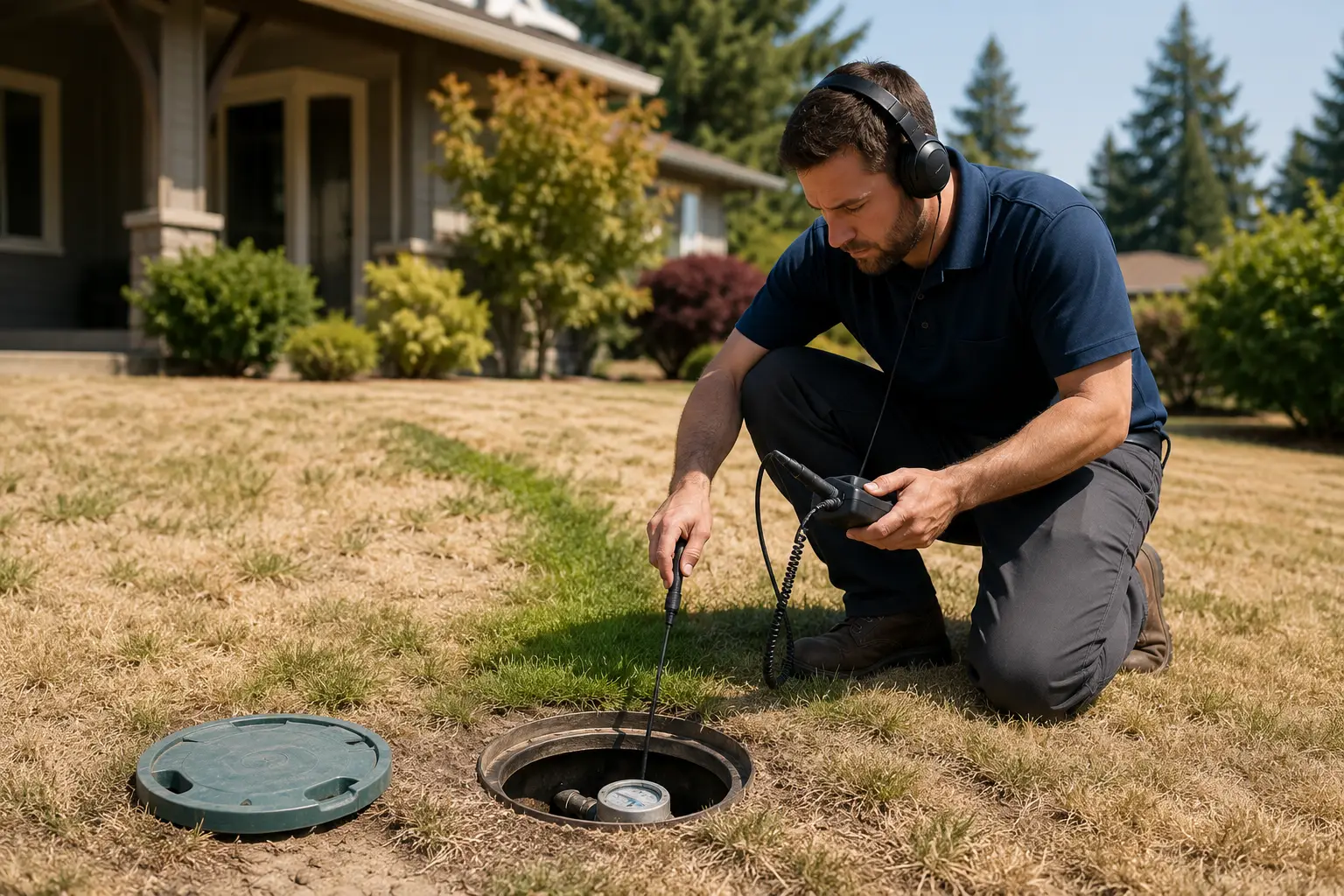
An irrigation system running on a timer will keep running whether it’s healthy or not. A poorly maintained irrigation system can waste up to 25,000 gallons of water a year, and a cracked line or stuck valve will happily do a chunk of that damage during the two weeks you’re at the beach, draining underground where a house-sitter would never spot it. Before you go, run each zone once and walk it for breaks, or simply shut the irrigation off and ask a neighbor to hand-water anything that truly needs it.
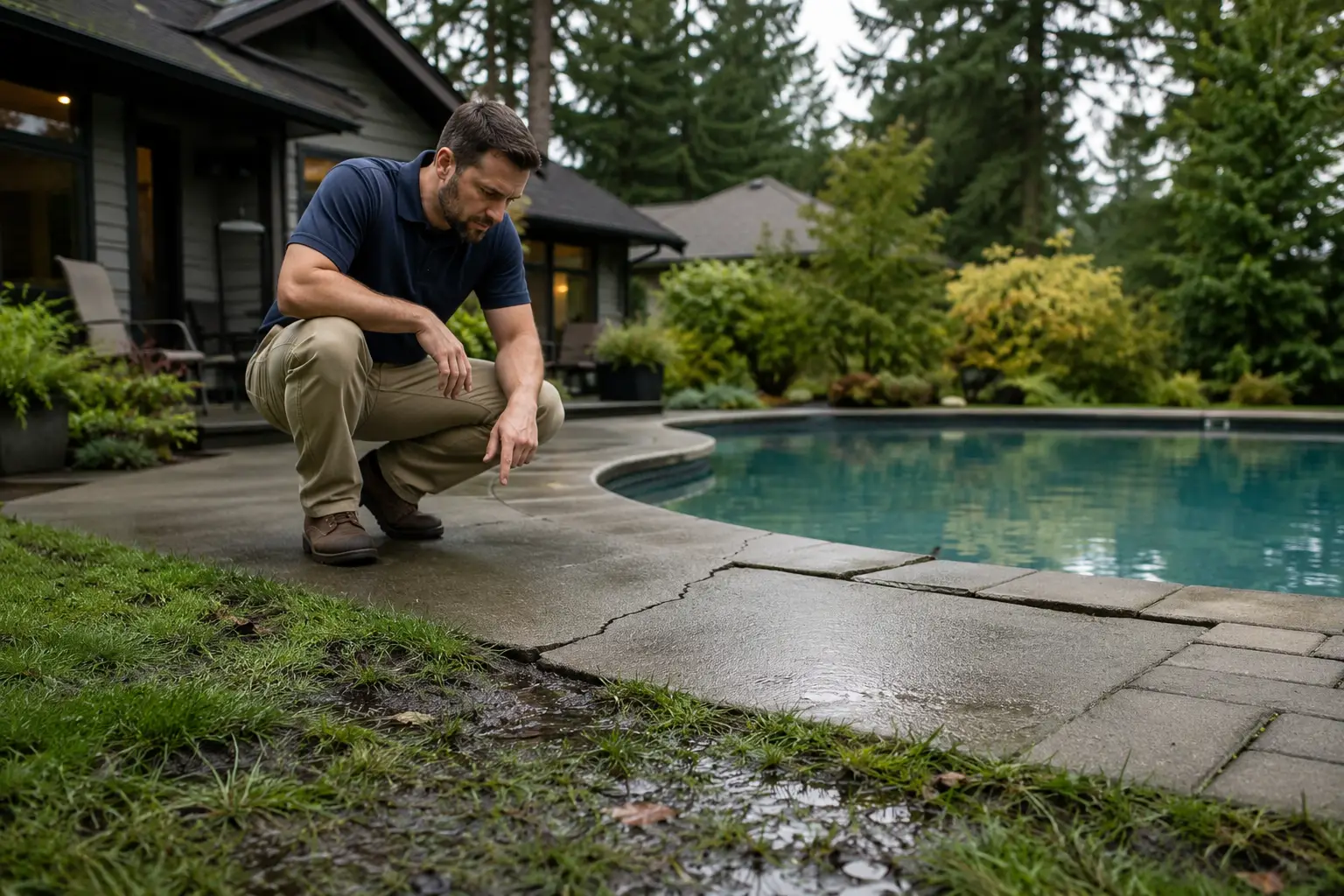
If you have a pool, know your normal water level and auto-fill behavior before you leave, and ask whoever’s watching the house to glance at it. A pool leak masked by an auto-fill valve can quietly lose thousands of gallons over a vacation while looking perfectly full. Our guide to the five signs your pool has a leak covers what to watch for.
The Insurance Angle You Should Know Before You Go
Here’s a detail that catches homeowners off guard. Taking reasonable precautions before leaving isn’t just good practice, it can affect whether a claim is paid at all. Many policies treat gradual, undetected leaks differently than sudden failures, and some include vacancy provisions that limit coverage when a home is left unoccupied for an extended period without reasonable safeguards.
The takeaway isn’t to panic about your policy. It’s to recognize that shutting off the water and arranging for someone to check the home aren’t only about preventing damage, they’re about staying on the right side of your coverage if something does go wrong. We go deeper into how insurers view water damage in our post on whether homeowners insurance covers a water leak. If you’re leaving for a month or more, it’s worth a quick call to your agent to ask what your policy expects of you.
Your Fifteen-Minute Pre-Vacation Checklist
Before you head out the door, run through this:
- Shut off the water at the main valve, and open a low faucet to drain the pressure
- If the main can’t be closed, shut off the washing machine, dishwasher, ice maker, and water heater valves
- Turn off or inspect the irrigation system so it isn’t watering a leak on a timer
- Note your pool’s normal level and auto-fill behavior, and ask someone to check it
- Ask a neighbor or house-sitter to walk the property once or twice, inside and out, looking and listening for water
- Confirm you know where your shut-off valve is and that it works, before you actually need it
None of this takes long, and together it turns your empty house from a leak’s best opportunity into a hardened, low-risk target.
Why This Matters More in Western Washington
Our region adds a reason to be extra careful. Much of western Washington sits on clay-heavy soils with naturally high seasonal water tables, which means water from a leak doesn’t drain away and disappear. It lingers, saturating crawl spaces and the ground around the foundation. A leak that runs for two weeks in an empty home here doesn’t just cause immediate water damage, it creates exactly the kind of prolonged saturation that leads to wood decay, mold, and structural issues long after the water is cleaned up.
Coming home to a saturated crawl space is a far worse homecoming than an unwatered lawn. Shutting off the water before you leave is what makes sure the only thing waiting for you is a stack of mail.
Take Fifteen Minutes Now, Save Your Trip Later
A great vacation shouldn’t end with a call from a neighbor about water coming out from under your garage door. The steps that prevent it are simple, quick, and free, and the peace of mind of knowing the water is off while you’re away is worth the two minutes it takes to close a valve.
If you’re not sure where your main shut-off is, whether it fully closes, or whether a hidden leak might already be running before you leave, we can help. Call Action Leak Detection at (360) 922-8829. We locate hidden leaks and help homeowners throughout King, Snohomish, Skagit, Whatcom, Island, and San Juan counties protect their homes, and we answer 24/7, including while you’re away.
Leak-proof the house first. Then go enjoy the trip.
Action Leak Detection serves Whatcom, Skagit, Snohomish, King, Island, and San Juan counties. We answer 24/7, including weekends and holidays.