Pool leak detection before winterizing is the step most Washington pool owners skip, and it is the one that can save the most money. Once the cover goes on and the water turns green-gray, a slow leak becomes almost impossible to see, and by spring a small problem can turn into a major repair.
Every October the same thing happens. The pool gets a little cooler, the leaves start to fall, and the season-ending to-do list gets longer. Lower the water, add chemicals, blow out the lines, snap the cover on, done. What rarely makes the list is the simple question: is this pool actually holding water?
Fall is the right moment to ask it. The pool is still easy to access, the water is still clear, and a leak found now can be fixed on your schedule instead of after a winter of hidden damage.
Why Winter Hides Pool Leaks So Well
In summer, a dropping water line is easy to notice. You see it at the skimmer, you see it at the tile, and you top it off with the hose. In winter, all of that changes.
Rain refills the pool under the cover, so a leak can be masked by rainwater coming in as fast as pool water goes out. The cover itself blocks your view of the water line. And because nobody is swimming, nobody is paying attention. A pool can lose water for months with no one the wiser.
That is how an owner opens the pool in April and finds the level far below the skimmer, the equipment pad soaked, or a patch of lawn that has been quietly saturated all winter.
Do the Bucket Test Before You Close
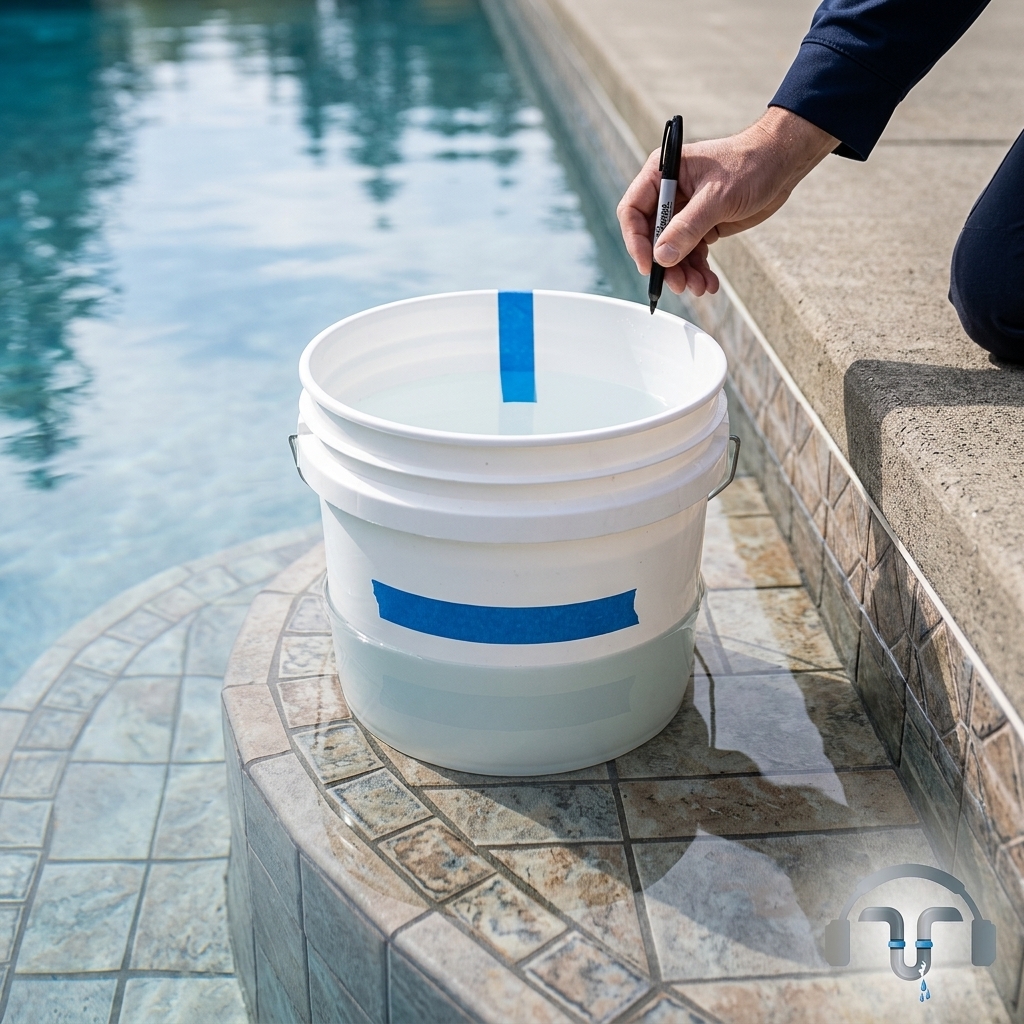
You do not need special equipment to get a first answer. The bucket test separates a real leak from normal evaporation, and it costs nothing.
- Fill a bucket with pool water and set it on a pool step so the rim stays above the waterline.
- Mark the water level inside the bucket and mark the pool’s water level on the outside of the bucket.
- Leave the pump running as usual and turn off any auto-fill.
- After 24 hours, compare the two marks.
If the pool dropped more than the bucket, water is leaving by some route other than evaporation. For a rule of thumb, EPA WaterSense guidance defines meaningful pool water loss as more than about 2 inches a week in most climates, or up to 3 inches a week in hot, dry conditions, beyond what normal evaporation accounts for. In Washington’s cool fall weather, evaporation is lower than in summer, so a steady drop is even more suspicious.
Run the test with the pump on, then again with the pump off. If the loss changes, that points toward the plumbing and equipment side. If it does not, the shell, skimmers, or lights are more likely.
What Freezing Does to a Pool With a Hidden Leak
Western Washington does not freeze as often as other parts of the country, but cold snaps do happen, and they tend to arrive when nobody is watching the pool.
Water expands when it freezes. A crack in a return line, a loose skimmer throat, or a weak fitting can take on water and then split further when that water freezes. Cold temperatures make existing cracks and leaks worse, which is why a small seep in October can be a real repair bill in February.
The most common trouble spots are the same ones we find in summer: skimmer connections, return fittings, pool lights, and the underground plumbing between the equipment pad and the shell. Closing the pool without knowing the condition of those lines means you are insulating a problem, not solving it.
Pool Leak Detection Before Winterizing: How a Professional Check Works
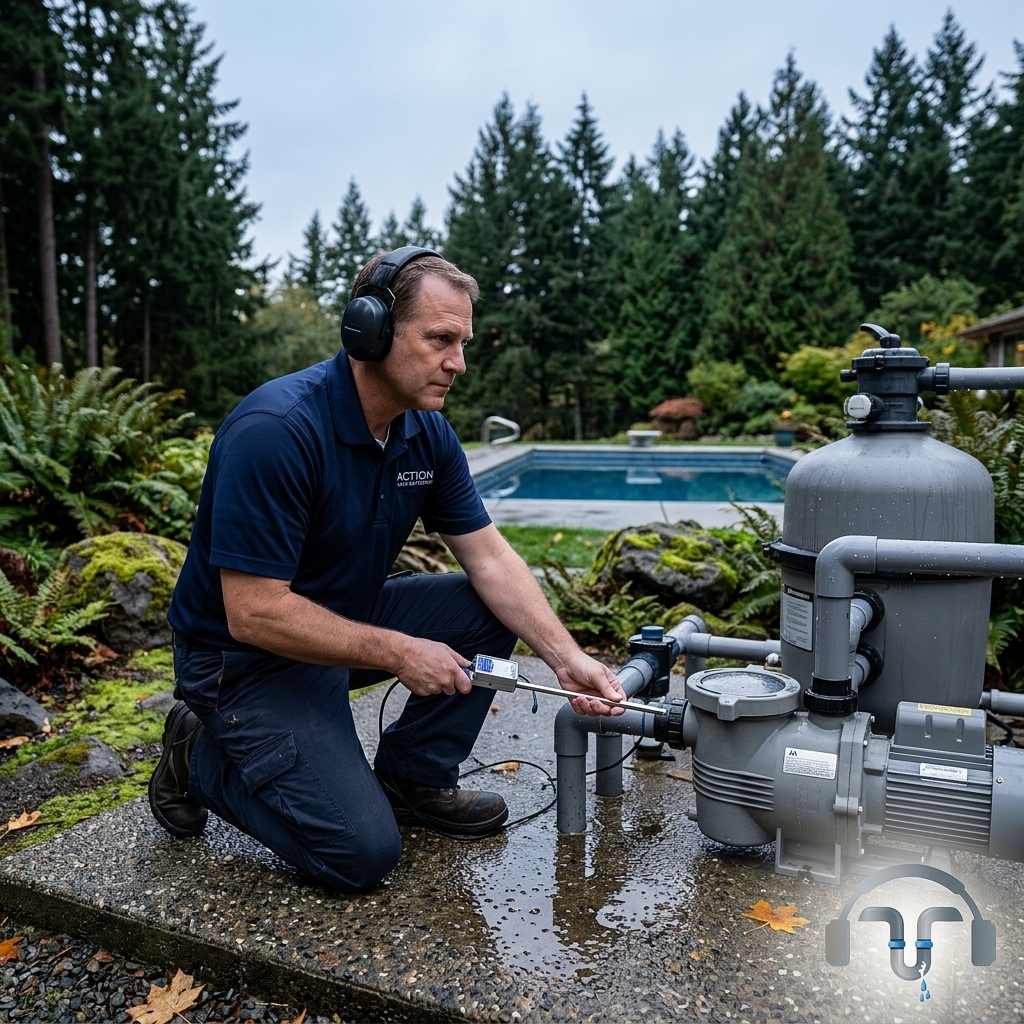
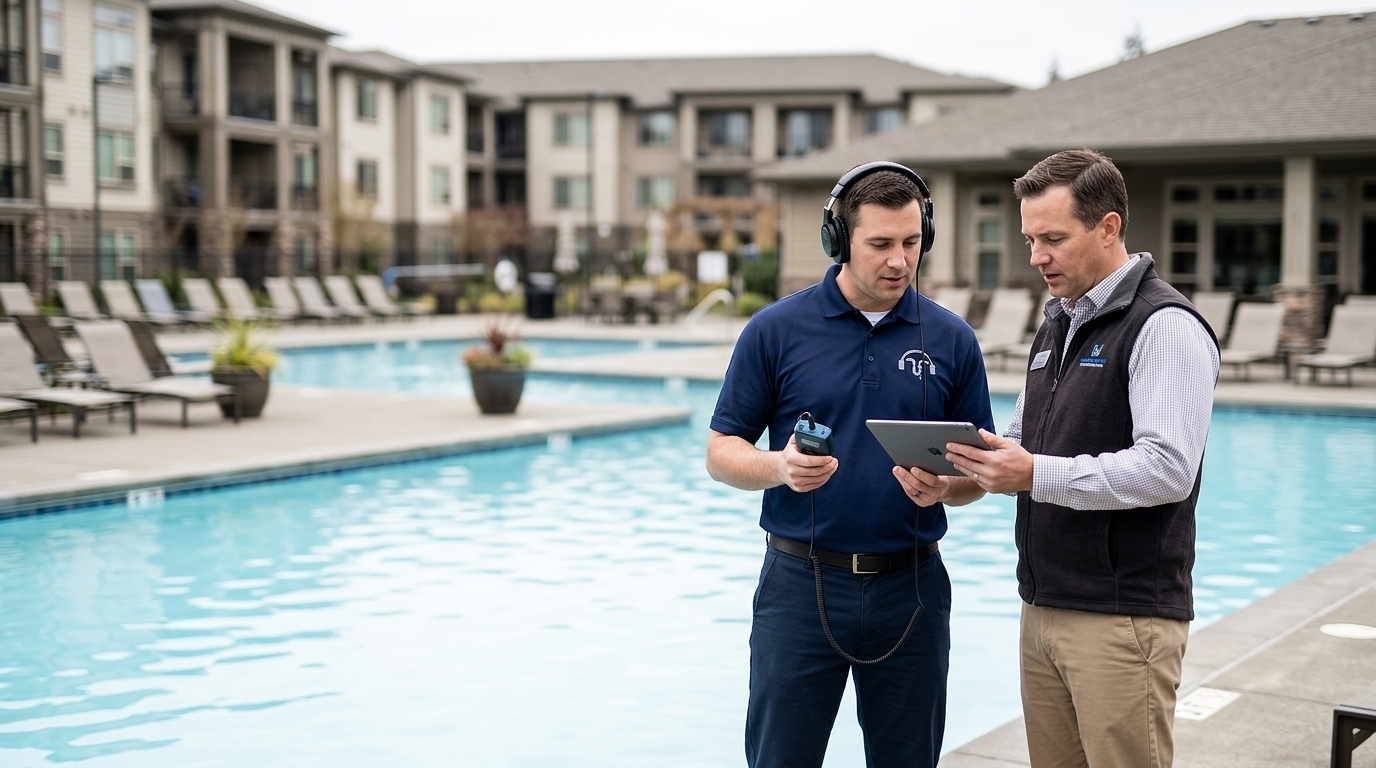
When the bucket test says something is off, or when you simply want certainty before you close, a professional check gives you a clear answer without tearing anything up.
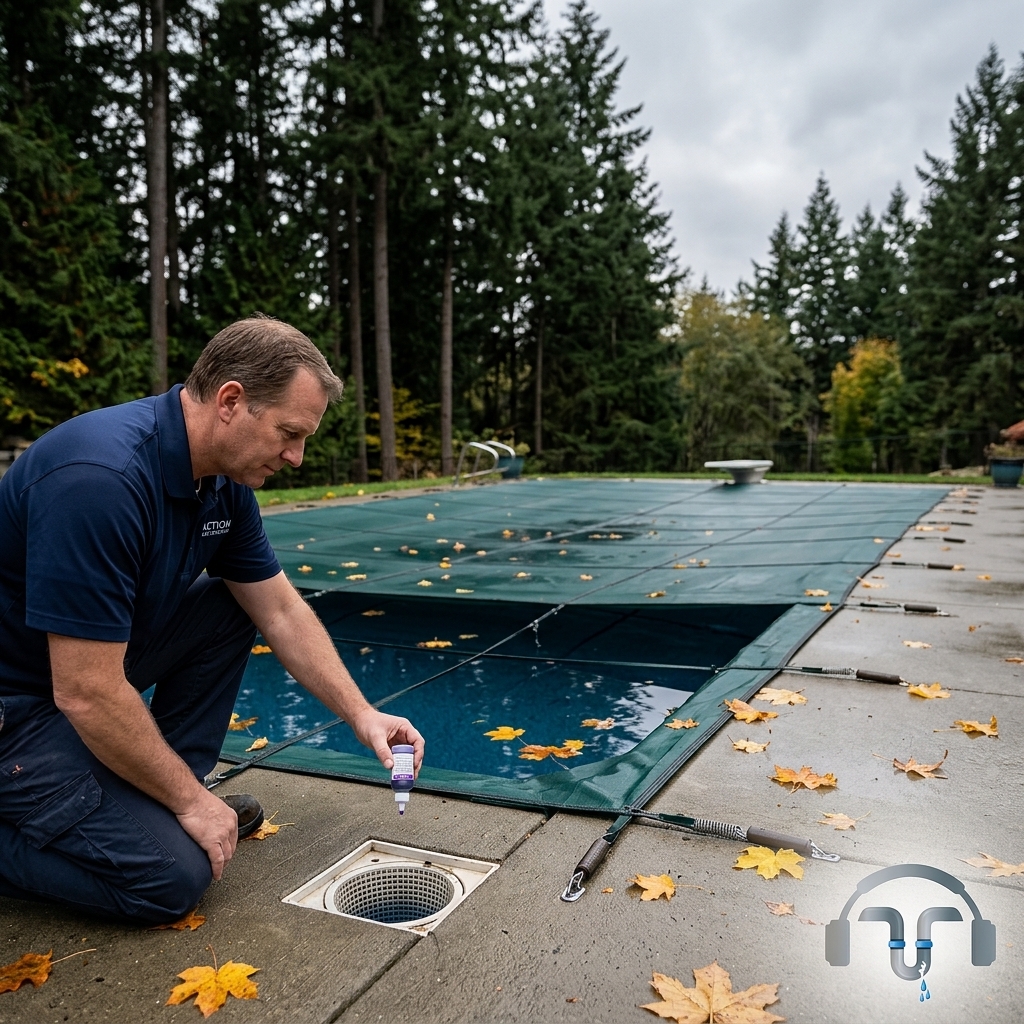
Dye testing shows water being pulled through cracks and loose fittings. Pressure testing isolates each line to find out which one is losing water. Acoustic listening equipment picks up the sound of water escaping from underground plumbing, and in the right situations infrared and ground-penetrating radar help confirm the location. The goal is always the same: find the exact spot first, then recommend only the repair that is actually needed.
Doing this before winterization has a second benefit. If a line is leaking, it can be repaired or properly isolated before it is blown out and plugged for the season, instead of being closed up with a known problem inside it. For more on how this process saves money, see our guide on how pool leak detection can save costs for Washington pool owners.
What to Do If the Water Level Drops Under the Cover
Sometimes the leak shows up after you have closed. If the level keeps falling over the winter, resist the urge to just keep topping it off.
Check the level every couple of weeks and write it down. A steady drop that then stops can be a clue: when water loss stops, the pool may have reached the level of the leak. Note where the water settles and tell your leak detection technician, because it narrows the search considerably.
Keep the pool from dropping too far, especially with a vinyl liner, because a liner without enough water behind it can shift and wrinkle. If the loss is steady and large, call before the problem spreads to the surrounding soil or equipment.
Spring Opening: Signs You Had a Leak All Winter
If you did not check before closing, spring is your second chance. Warning signs when you pull back the cover include:
- A water level far lower than where you left it, with no big storm to explain it
- Soft, soggy, or unusually green ground near the pool or equipment pad
- Cracked or shifted tile, coping, or decking
- Air bubbles at the return jets after startup
- A pump that loses prime or struggles to circulate
Any one of these deserves a closer look. If you manage a shared pool, our article on commercial pool leak detection for HOAs, hotels, and public facilities covers how the same problems play out at larger properties.
Close the Pool Knowing It Holds Water
Winterizing is about protecting your pool until next season. Knowing the pool holds water before you close it is the part that makes the rest of the work worth doing.
Our pool leak detection service covers residential pools, community and HOA pools, hotels, public facilities, spas, and more, using non-invasive methods that find the leak without draining the pool or digging first.
If you are about to close your pool, or you are seeing the level drop under the cover, call Action Leak Detection at (360) 922-8829. We provide precise, non-invasive pool leak detection across Whatcom, Skagit, Snohomish, King, Island, and San Juan counties, 24/7.
Close it right. Open it leak-free.
Action Leak Detection serves Whatcom, Skagit, Snohomish, King, Island, and San Juan counties. We answer 24/7, including weekends and holidays.