Commercial pool leak detection is no longer just an afterthought for Washington property managers, it has become essential to protecting HOAs, hotels, and public facilities from hidden water loss.
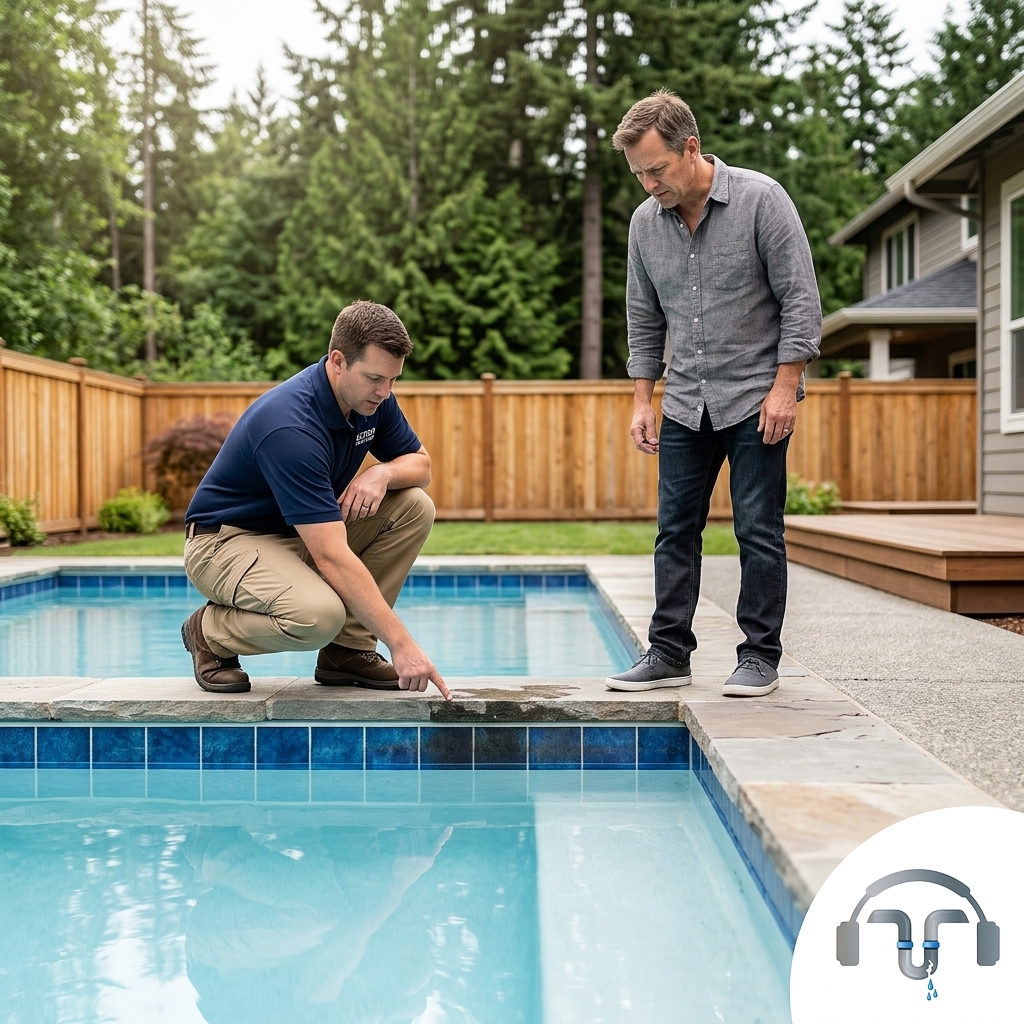
Every pool article on this blog so far has been written for one kind of reader: the homeowner with a backyard pool, wondering why the water level keeps dropping. That’s still the most common call we get, and for good reason. But a hidden pool leak doesn’t respect property lines, and the same slow, invisible water loss that drains a residential pool is quietly draining budgets at HOAs, hotels, public pools, and fitness facilities across Washington right now.
We recently expanded our pool leak detection service to formally cover the full range of pools we work on, residential, shared community pools, hospitality, municipal, and more, and it felt like the right moment to talk about who else is dealing with this problem, and why the stakes look different depending on which side of the fence your pool is on.
The Scale of the Problem Doesn’t Change. The Consequences Do.
Here’s the baseline every pool owner should know, whether it’s one pool in a backyard or forty units sharing one at an apartment complex. EPA WaterSense guidance defines meaningful pool water loss as more than about 2 inches a week in most climates, or up to 3 inches a week in hot, dry conditions, beyond what normal evaporation accounts for. Cross that threshold consistently, and something other than the sun is taking your water.
For a single homeowner, that’s an annoying, costly problem. For a shared or commercial pool, the same leak is multiplied by scale, more water, more wasted chemicals, more strain on equipment that’s already running longer hours, and in many cases, more people relying on that pool staying open and full. The physics of the leak doesn’t change based on who owns the pool. The cost of ignoring it does.
Apartment, Condo, and HOA Pools: A Shared Cost Nobody Notices Right Away
Shared pools present a particular challenge: a leak that would prompt an individual homeowner to investigate within days can run for weeks or months in a community pool before anyone connects a rising water bill to a specific cause. The cost gets absorbed into HOA dues or a property’s operating budget, and by the time someone flags it, the number has grown quietly in the background.
There’s also an operational pressure that doesn’t exist with a backyard pool. A community pool can’t stay closed for long without residents noticing and asking questions. That makes precision matter even more, finding the leak in return lines, the shell, or the equipment pad accurately the first time, so repairs stay small and the pool reopens fast, rather than a guess-and-check approach that extends the closure.
Hotels and Resorts: When a Leak Becomes a Guest Experience Problem
For a hotel or resort, a pool issue isn’t just a maintenance line item, it’s visible to every guest who walks past a low pool or a roped-off deck during their stay. First impressions and online reviews are on the line in a way they simply aren’t for a private residence.
This is where non-invasive detection methods matter most. Pinpointing the leak location before any tile gets pulled up or any area gets closed off means maintenance teams know exactly where to focus, minimizing the disruption guests actually see. A precise diagnosis protects both the repair budget and the experience the property is selling.
Public and Municipal Pools: Tight Budgets, Tighter Schedules
Parks departments and aquatic centers operate on budgets that don’t have much room for unaccounted water loss, and a hidden leak in a public pool’s shell, plumbing, or filtration system is a direct hit to resources meant to serve the whole community. These facilities also run on packed schedules, lap swim, lessons, public hours, that don’t leave much flexibility for extended downtime.
Working around a facility’s actual operating hours, rather than forcing a closure to accommodate the investigation, is part of what makes detection practical for a public pool rather than disruptive. The goal is the same as anywhere else: a clear, confirmed answer on where the water is going, without taking the pool offline longer than necessary.
Spas, Hot Tubs, Swim Schools, and Fitness Centers
Smaller systems aren’t exempt. A spa or hot tub that won’t hold water almost always points to a specific jet fitting, a shell crack, or a line to the equipment pad, and the same dye and pressure testing methods used on a full-size pool apply just as precisely on a smaller one. Catching it early keeps the repair small and avoids wasting water and chemicals on a system that’s just going to keep losing both.
Swim schools and fitness centers carry a different kind of pressure: their pool isn’t a feature, it’s the business. Lessons, lap swim, and therapy sessions depend on that water staying in the pool and on the schedule staying intact. A fast, accurate diagnosis before any demolition starts is what keeps a leak from turning into a closure that affects paying members and scheduled classes.
The Common Thread Across Every Type of Pool
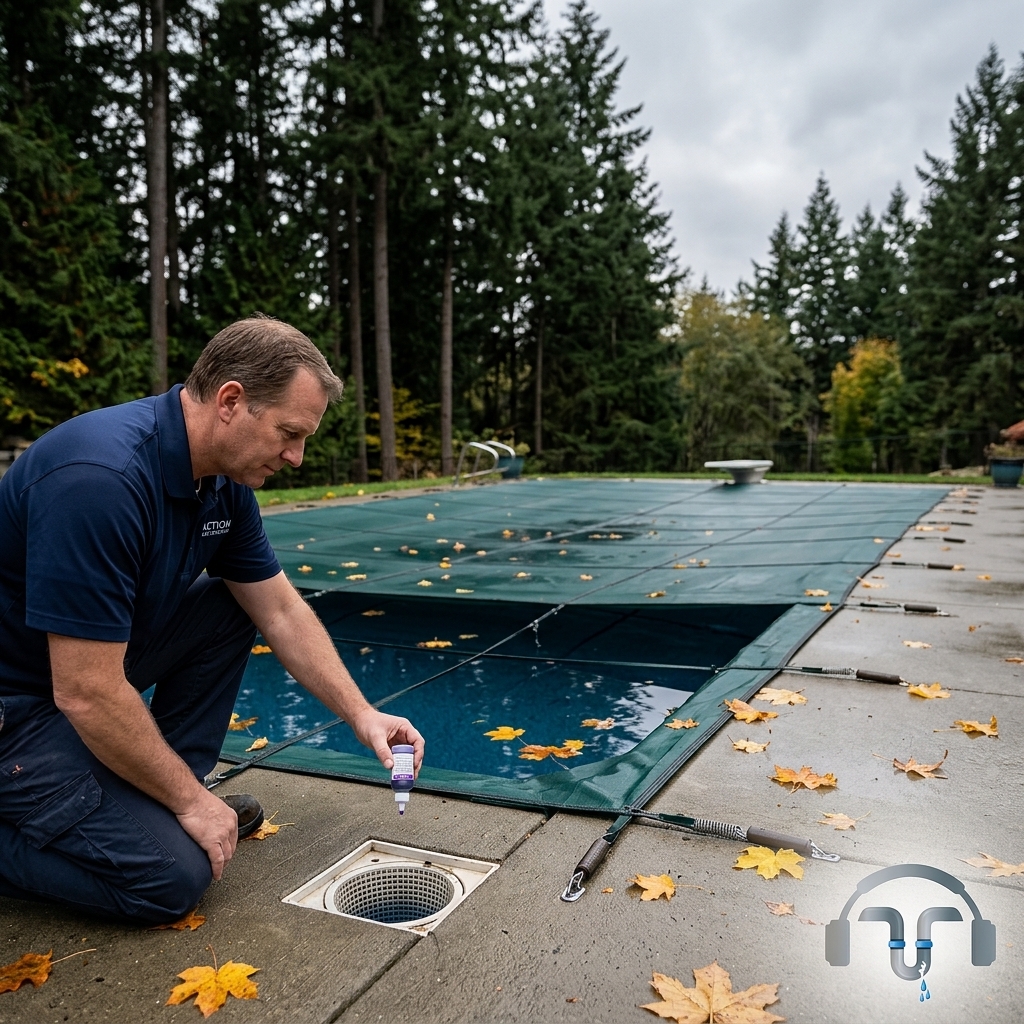
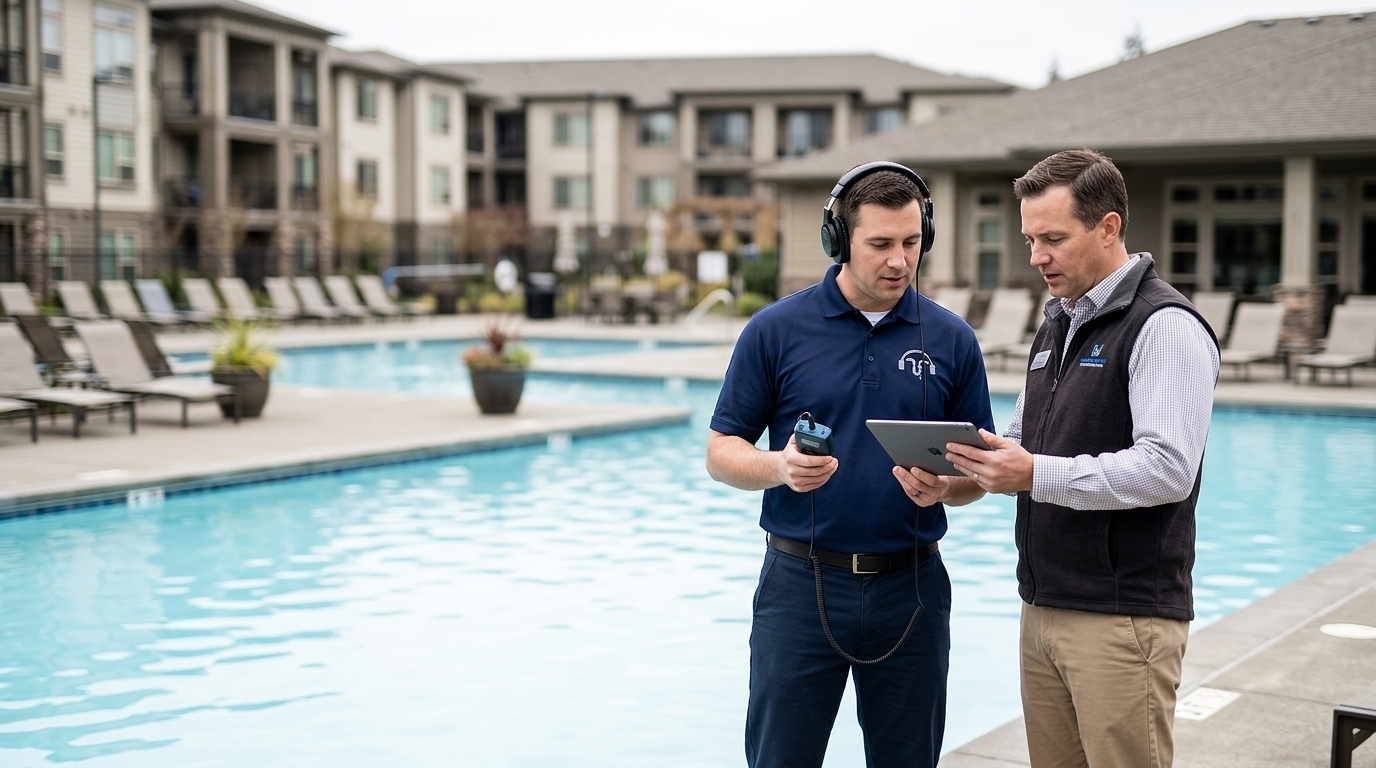
Regardless of who owns the pool or how many people use it, the fundamentals of finding a leak don’t change. Dye testing, pressure testing, acoustic listening equipment, and in the right situations infrared cameras and ground-penetrating radar, locate leaks in shells, liners, skimmers, lights, and underground plumbing without draining the pool or tearing up the surrounding property first. We only recommend digging or draining once the leak’s exact location is confirmed and a repair genuinely requires it.
There’s also a financial argument that applies just as much to a 300-unit community pool as it does to a single backyard. Water damage and freezing claims average $15,400 and rank as the second most common cause of homeowners insurance losses nationally, and the same logic of compounding cost applies to commercial and institutional property as well. A leak caught early is a line item. A leak left to run is a liability.
If you’re a residential pool owner wondering about the warning signs specific to your situation, we cover those in more detail in our guide to the five signs your pool has a leak.
One Team, Every Type of Pool
Whether you’re managing a single backyard pool, a shared amenity for dozens of households, a hotel pool guests see every day, or a public facility the whole community relies on, the question is the same: where is the water going, and how do we find out without making the problem bigger in the process.
We’ve built our pool leak detection service around answering exactly that, for residential pools, apartment, condo, and HOA pools, hotel and resort pools, public and municipal pools, spas and hot tubs, swim schools and fitness centers, and beyond. You can see the full scope of what we cover on our pool leak detection service page.
If your pool, or the one your community, property, or facility depends on, is losing more water than it should, call Action Leak Detection at (360) 922-8829. We provide precise, non-invasive pool leak detection throughout Whatcom, Skagit, Snohomish, King, Island, and San Juan counties, 24/7.
Stop guessing. Start swimming.
Action Leak Detection serves Whatcom, Skagit, Snohomish, King, Island, and San Juan counties. We answer 24/7, including weekends and holidays.