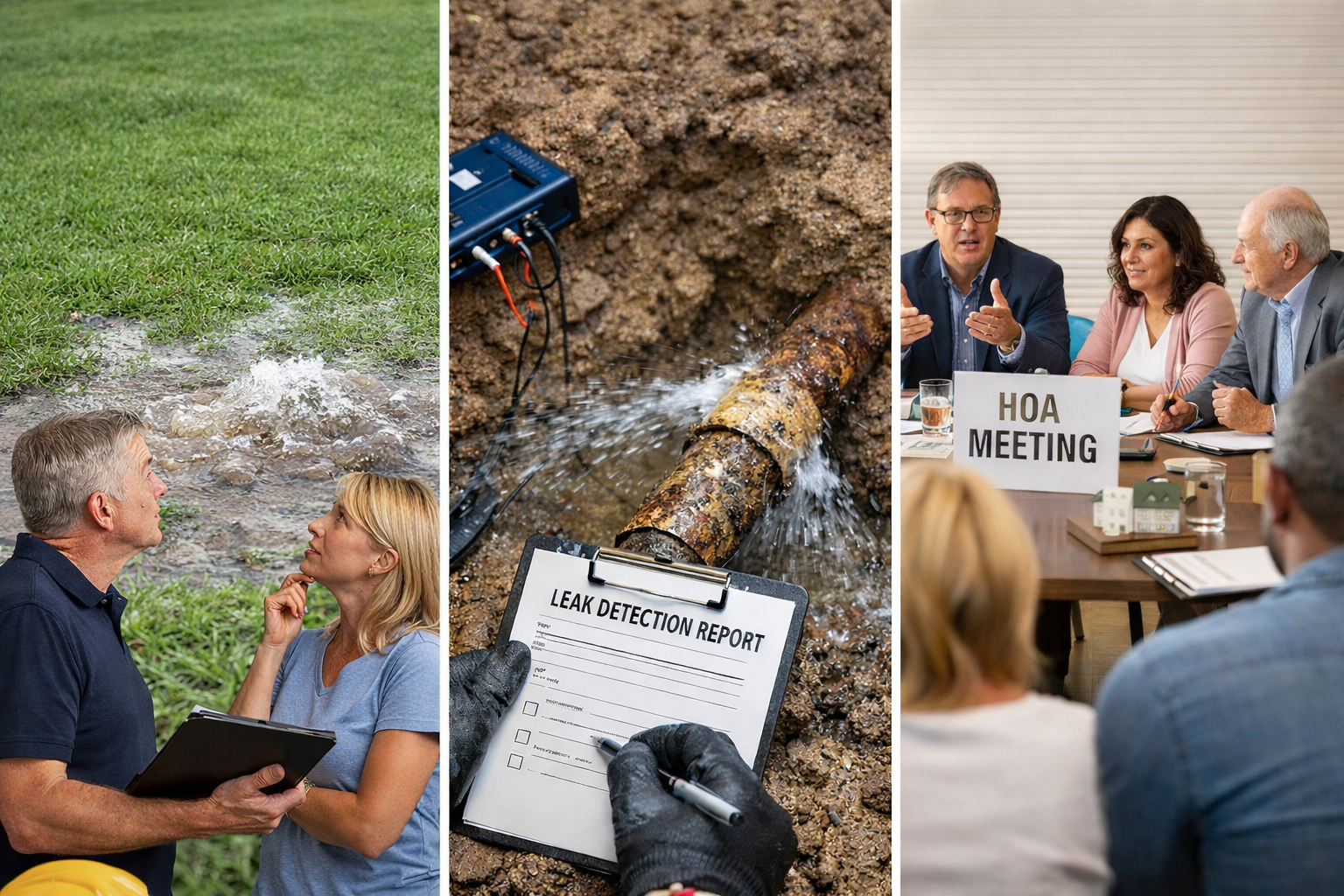
Water leaks are one of the most common — and most misunderstood — problems in HOA-managed communities. A small, hidden leak can quickly turn into a major dispute involving property damage, insurance claims, and the question everyone asks first:
“Whose responsibility is this?”
Whether you’re a homeowner, board member, or property manager, understanding how leaks are handled in HOA communities can save time, money, and frustration. Here’s what you need to know.
Why Water Leaks Are Especially Complicated in HOAs
Unlike single-family homes, HOA communities often have shared infrastructure — including:
- Underground water lines
- Common walls and ceilings
- Shared irrigation systems
- Community amenities (clubhouses, pools, landscaping)
Because water travels, the source of a leak and the visible damage are often in different locations, making responsibility less obvious.
A leak inside one unit may originate in:
- A neighboring unit
- A shared pipe behind walls
- A common irrigation line
- A municipal or utility connection
That’s where confusion — and conflict — usually begins.
Who Is Responsible? The General Rule (and Why It’s Not Always Clear)
Most HOAs rely on their CC&Rs (Covenants, Conditions & Restrictions) to determine responsibility. While documents vary, responsibility usually falls into three categories:
🏠 Homeowner Responsibility
Typically includes:
- Plumbing fixtures inside the unit
- Pipes serving only that unit
- Appliances, toilets, sinks, and water heaters
🏢 HOA Responsibility
Often includes:
- Common area plumbing
- Shared or main water lines
- Irrigation systems
- Pipes located behind shared walls or beneath slabs
🤝 Shared or Gray-Area Responsibility
This is where disputes happen. Examples:
- Leaks inside walls but serving multiple units
- Underground leaks beneath driveways or common landscaping
- Water damage affecting multiple units
In these cases, accurately locating the source of the leak is critical before responsibility can be assigned.
Why Delayed Leak Detection Costs Everyone More
When leaks go unresolved, the impact compounds quickly:
- Escalating water bills
- Structural damage to walls, slabs, and foundations
- Mold growth and health concerns
- Insurance claim complications
- Tension between homeowners and HOA boards
The longer a leak remains hidden, the more expensive — and contentious — the repair process becomes.
Best Practices for HOAs & Homeowners When a Leak Is Suspected
✅ 1. Act Quickly — Even if Responsibility Isn’t Clear Yet
Waiting to assign blame often allows damage to spread. The priority should always be stopping water loss and preventing further damage.
✅ 2. Use Professional Leak Detection Before Excavation
Guessing where a leak is — or starting invasive repairs without confirmation — often leads to:
- Unnecessary drywall or concrete removal
- Higher repair costs
- Disputes over incorrect assumptions
Non-invasive leak detection can pinpoint the source without unnecessary damage, making next steps clearer for everyone involved.
✅ 3. Document Everything
HOAs and homeowners should keep records of:
- Detection reports
- Photos and videos
- Water meter readings
- Repair timelines
Clear documentation helps with insurance claims and protects all parties if disagreements arise later.
✅ 4. Communicate Transparently
Boards should clearly explain:
- What’s known
- What’s being investigated
- What the next steps are
- Expected timelines
Homeowners are far more cooperative when they feel informed.
Insurance: What HOAs and Homeowners Should Know
Insurance coverage often depends on:
- Where the leak originated
- Whether damage occurred to common areas or private units
- How long the leak existed before discovery
Many policies cover sudden damage but not long-term water loss, which is another reason early detection matters.
How Professional Leak Detection Reduces Conflict
Professional leak detection provides:
- An unbiased, third-party assessment
- Precise identification of the leak source
- Documentation useful for HOAs, homeowners, and insurers
- Faster resolution with less property damage
Most importantly, it removes guesswork, which is often the root cause of HOA disputes.
Final Thoughts: Clarity Prevents Conflict
Water leaks don’t have to turn into HOA nightmares. When everyone understands their roles — and relies on accurate information instead of assumptions — problems get resolved faster and with far less stress.
Whether you’re a homeowner noticing unexplained water damage or an HOA board dealing with rising water costs, finding the source first is always the smartest move.
Need Help Locating a Leak in an HOA or Residential Community?
Professional, non-invasive leak detection can identify the source quickly, minimize damage, and help all parties move forward with confidence.
Don’t guess. Detect. Resolve.