A leaking pool is stressful enough on its own. Finding out afterward that your insurance won’t pay for it makes the whole experience worse, and it’s a more common outcome than most pool owners expect.
The confusion is understandable. Homeowners policies do cover water damage, in some circumstances, so it’s easy to assume a pool leak falls under that umbrella. It often doesn’t, and the reason comes down to a distinction insurers apply consistently and pool owners rarely hear about until they’re filing a claim. Here’s what typically is and isn’t covered, why the difference matters, and what you can do to put yourself on the right side of it.
The Distinction Almost Every Policy Makes: Sudden vs. Gradual
Nearly every homeowners policy draws a hard line between two categories of water damage, and which side of that line your pool leak falls on determines whether you have a claim at all.
Sudden and accidental damage is generally covered. A supply line that bursts, a sudden pipe failure, or another abrupt event is the kind of loss standard homeowners policies are built to pay for. If something fails all at once and without warning, that’s the scenario your policy most likely responds to.
Gradual, maintenance-related damage is generally excluded. Slow seepage, a worn liner, long-term deterioration, and leaks that develop over weeks or months are treated as maintenance issues rather than insurable losses, and they’re excluded from coverage as a matter of course. From an insurer’s perspective, a slowly failing liner or a hairline crack that’s been leaking for months is something a homeowner was responsible for catching and addressing, not an unforeseeable event.
Here’s the uncomfortable part for pool owners specifically: the overwhelming majority of pool leaks fall into the second category. Liner seams separate gradually. Fitting gaskets degrade over years. Small shell cracks widen slowly. Underground plumbing joints fail incrementally as ground conditions shift. Almost none of these happen suddenly in the way an insurer’s definition requires.
Why Pools Get Treated More Strictly Than the Rest of the House
It’s worth understanding that pools aren’t just held to the same sudden-versus-gradual standard as the rest of your home, they’re often treated even more cautiously. Water damage originating from a pool or other structure is commonly listed as an explicit exclusion in standard policies, separate from how the policy treats a leaking dishwasher line or a burst pipe inside the house.
The reasoning is consistent with how insurers view maintained equipment generally. A pool is a large piece of infrastructure that requires ongoing upkeep, and insurers expect owners to monitor it. Damage tied to algae buildup from neglect, cracks from gradual settling, or general wear and tear is treated as a maintenance failure, not an insurable accident, regardless of what part of the property it affects. A pool that’s been quietly losing water for months sits squarely in that category.
Washington’s Office of the Insurance Commissioner echoes this same principle for water damage generally: policies typically cover damage that happens suddenly and accidentally, and gradual leaks, wear and tear, and lack of maintenance are common reasons a claim gets denied. Pools simply make this distinction more consequential, because so much of what goes wrong with a pool happens gradually by nature.
What Might Actually Be Covered
None of this means a pool-related claim is automatically hopeless. A few scenarios are more likely to be treated favorably:
A genuinely sudden equipment failure. If a pump, filter, or piece of pool equipment fails abruptly, causing a rapid loss, that’s closer to the sudden-and-accidental category insurers are built to cover, especially with the right endorsement in place.
Damage from a covered external peril. If a falling tree limb cracks the shell, or storm damage causes a sudden failure, that’s a different situation than ordinary wear opening a slow leak.
Equipment breakdown coverage, if you have it. Some insurers offer equipment breakdown coverage as an optional endorsement, which can specifically address mechanical failures in pool equipment that a standard policy wouldn’t otherwise pay for. If you own a pool, this is worth asking your agent about directly rather than assuming your standard policy includes it.
The common thread is speed and cause. The more clearly a loss can be tied to a sudden, external, or mechanical event rather than slow deterioration, the better your odds of coverage.
Why Acting Early Matters More Than the Insurance Question
Here’s the part worth sitting with regardless of what your policy says. Even in the best-case scenario where a claim might be covered, insurers still expect homeowners to act reasonably once a problem is discovered. A leak you noticed months ago and didn’t investigate is a much harder claim to defend than one you caught and addressed quickly, and delaying makes the underlying damage worse either way.
That’s really the practical takeaway. Whether or not insurance ends up in the picture, the financial exposure from a pool leak comes almost entirely from how long it’s allowed to run. A leak caught and confirmed within days is a modest repair. The same leak left to develop for a season is a bigger repair, a bigger water bill, and potential damage to the surrounding deck and yard that we’ve covered in a separate post on how a hidden pool leak damages your deck and yard. Insurance coverage is genuinely uncertain. The cost of delay is not.
What to Do Before You Ever Need to File a Claim
A few things are worth doing regardless of your specific policy language:
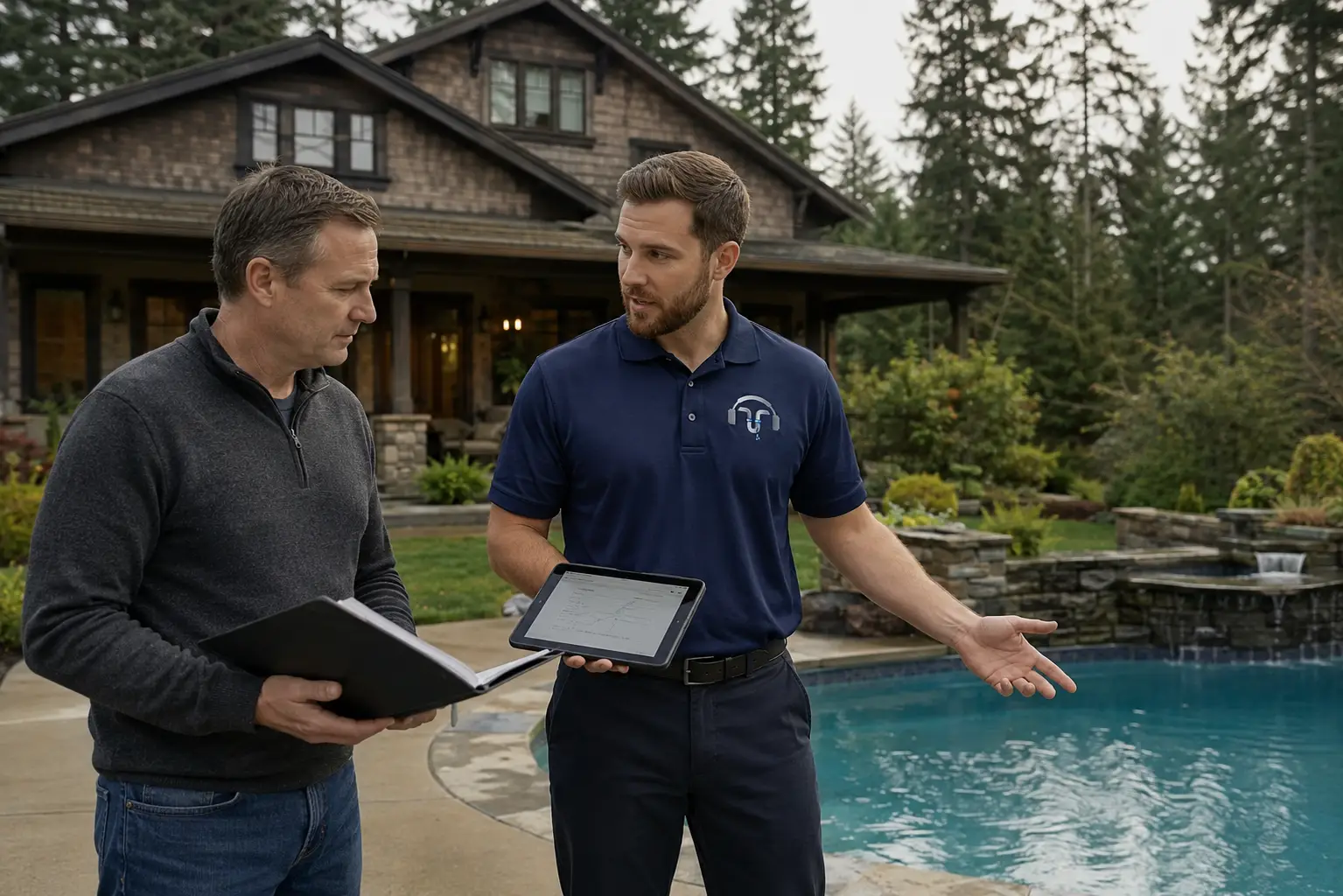
Call your agent and ask directly. Don’t assume. Ask specifically whether your policy excludes pool-related water damage, whether an equipment breakdown endorsement is available, and what documentation they’d want to see if you ever needed to file a claim.
Watch for the signs early. We cover the most commonly missed warning signs in our guide to the five signs your pool has a leak. Catching a leak in its early stage is what keeps it in the realm of a quick, affordable fix rather than a larger claim-worthy loss.
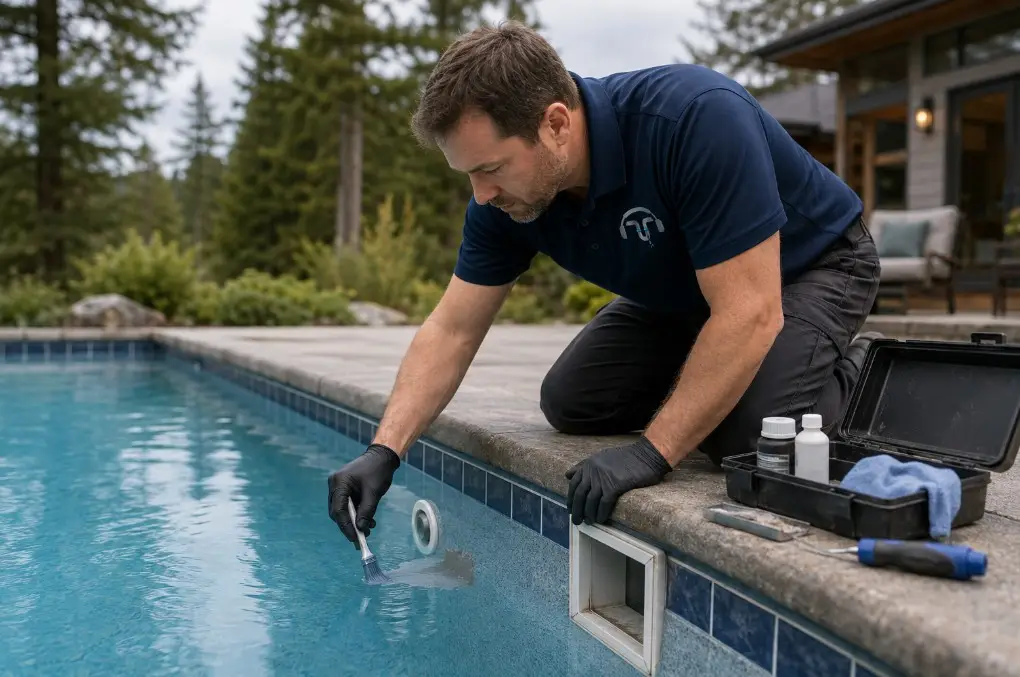
Get professional documentation the moment you suspect something. A dated, professional detection report that confirms when a leak was found and its likely cause is useful whether or not you end up filing a claim, and it removes any ambiguity about how quickly you acted once the issue became apparent.
Don’t Let the Insurance Question Be the Reason You Wait
It’s tempting to think of a hoped-for insurance payout as a reason to hold off on calling someone, why pay out of pocket now if the policy might cover it. In practice, the opposite is usually true. Most pool leaks are gradual by nature, which means most fall outside standard coverage, and waiting only makes the eventual repair larger regardless of what your policy says.
If your pool is losing water, don’t wait to find out where you stand with your insurer before you find out where the leak actually is. Call Action Leak Detection at (360) 922-8829. We locate pool leaks precisely and non-invasively, and provide clear documentation of what we find, for pool owners throughout King, Snohomish, Skagit, Whatcom, Island, and San Juan counties.
Know what your policy covers. But don’t let the question of coverage be the reason the leak keeps running.
Action Leak Detection serves Whatcom, Skagit, Snohomish, King, Island, and San Juan counties. We answer 24/7, including weekends and holidays.