The Hidden Dangers Lurking Beneath Your Beautiful Washington Yard
Here in Washington, we take pride in our landscapes. From the vibrant flower beds of spring to the lush, green lawns of summer, a beautiful yard is a rewarding part of homeownership. But as you plant new gardens, lay fresh sod, or adjust your irrigation for the season, you could be unknowingly hiding a serious problem: an underground water leak. These hidden leaks can waste thousands of gallons of water, erode your property’s foundation, and lead to costly repairs if left unchecked.
Understanding how seasonal landscaping activities interact with your water usage is the first step in protecting your property. What looks like a healthy, well-watered patch of lawn could actually be a symptom of a costly subsurface pipe break.
How Landscaping Can Disguise a Leak
Seasonal yard work, while improving curb appeal, can create the perfect camouflage for hidden water leaks. Being aware of these scenarios is crucial for early detection.
New Plantings and Mulch
When you add new plants, shrubs, or trees, you naturally increase watering in those specific areas. A slow leak nearby might be mistaken for extra moisture from your hose or sprinkler. Similarly, a fresh layer of mulch is excellent for retaining moisture, but it can also absorb water from a pinhole leak in a pipe below, masking soggy soil that would otherwise be a clear warning sign.
Lush, Green Patches
One of the most common signs of an underground leak is a patch of grass that is unusually green and healthy compared to the rest of the lawn. Homeowners often mistake this for a sign of great soil or good sprinkler coverage. In reality, it could be a leaking water line constantly feeding the roots in that area. This is particularly deceptive during Washington’s dry summer months when you expect some parts of your lawn to struggle.
Changing Irrigation Schedules
As we move from the wet spring to a dry summer and back to a rainy fall, our irrigation schedules change dramatically. During peak summer watering, a spike in your water bill from a leak might get lost in the overall high usage. Conversely, as you turn your sprinklers off in the fall, a leak that was previously hidden by saturated ground may suddenly reveal itself through pooling water. A professional irrigation leak detection service can pinpoint these issues regardless of the season.
Key Warning Signs Your Yard Is Masking a Leak
Look past the surface beauty of your landscape and watch for these subtle but critical indicators of a potential underground water leak:
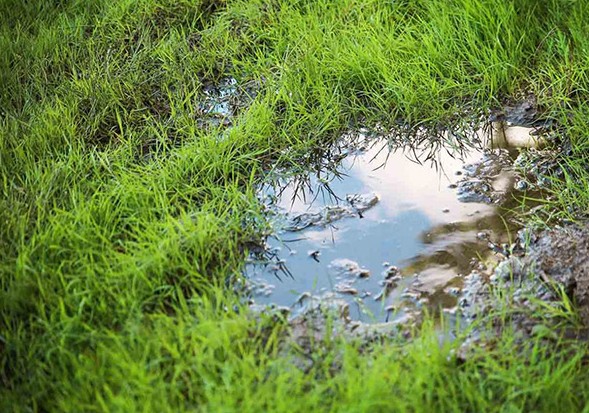
- Soggy Spots or Puddles: If you notice areas of your yard that are constantly damp or have standing water, even when it hasn’t rained and the sprinklers are off, it’s a major red flag.
- Unexplained Growth: Beyond a suspiciously green patch of grass, look for moss or fungal growth in areas that are typically dry.
- Shifting Soil or Paving Stones: A persistent underground leak can erode the soil, causing pavers, walkways, or retaining walls to sink, shift, or crack.
- Low Water Pressure: If you notice a sudden or gradual drop in water pressure inside your home, it could be caused by a significant leak in the main service line outside.
- A Spinning Water Meter: Turn off all water-using appliances in your home and check your water meter. If the dial is still moving, you likely have a leak somewhere on your property. This could be anywhere from a concrete slab leak to a break in the yard.
Did You Know?
According to the EPA, a tiny leak the diameter of a pencil lead can waste more than 6,000 gallons of water per month. That’s a significant impact on both your water bill and our local Washington water resources.
Best Practices for Monitoring Your Landscape
Proactive monitoring is the best defense against catastrophic water damage. Here’s how you can stay ahead of potential problems:
1. Regular Meter Checks
Make it a monthly habit to check your water meter using the method described above. This is the most reliable way to confirm if you have an active leak, even a small one.
2. Walk Your Property
After a period of dry weather, walk around your yard specifically looking for the warning signs. Pay close attention to the area between the street and your house where the main water line typically runs.
3. Know Your Lines
Before any major landscaping project, it’s wise to know where your underground utilities are. A professional water line locating service can map out your pipes to prevent accidental damage during digging.
4. Trust the Professionals
If you suspect a leak, avoid destructive digging. Modern, non-invasive techniques like acoustic listening devices, tracer gas, and infrared technology can pinpoint the exact location of a leak without destroying your beautiful landscaping.
Serving Homeowners Across Washington
The unique climate of the Pacific Northwest, with its wet winters and surprisingly dry summers, presents unique challenges for homeowners. Whether you’re managing a garden in Bellingham, maintaining a larger property on Whidbey Island, or caring for a suburban lawn in Everett, being vigilant about water usage is key. Action Leak Detection provides expert, non-invasive services across Whatcom, Skagit, and Snohomish counties to protect your property and peace of mind.
Don’t Let a Hidden Leak Destroy Your Landscape
If your water bill is climbing or you’ve noticed suspicious signs in your yard, don’t wait for minor issues to become major disasters. Protect your investment and conserve water with professional, non-invasive leak detection.
Frequently Asked Questions
Q: Will leak detection services ruin my lawn and garden?
A: Not with modern methods. At Action Leak Detection, we specialize in non-invasive techniques. We use advanced technology like acoustic sensors and tracer gas to locate leaks precisely from above ground, minimizing or completely avoiding the need for disruptive digging.
Q: How often should I check my irrigation system for leaks?
A: It’s good practice to inspect your irrigation system at the beginning and end of each watering season. A professional inspection every couple of years can catch hidden irrigation leaks that aren’t visible on the surface, saving you a significant amount of water and money.
Q: Can a small, slow leak really cause that much damage?
A: Absolutely. Over time, even a minor dripping leak can saturate the soil, leading to soil erosion, foundation damage, and the creation of sinkholes in your yard. It also promotes mold and can attract pests, turning a small plumbing issue into a major property hazard.
Glossary of Terms
Subsurface Leak: A leak in a water pipe that is located underground, not visible from the surface.
Acoustic Detection: A non-invasive method that uses sensitive listening equipment to hear the specific sound frequencies created by water escaping a pressurized pipe underground.
Tracer Gas: A technique where a safe, non-toxic gas (typically a hydrogen/nitrogen mix) is introduced into the empty pipe. The gas escapes through the leak and rises to the surface, where it is detected by sensitive probes to pinpoint the leak’s exact location.